Modern Lines, Traditional Warmth: What a 2026 Fireplace Build-Out Should Look Like
A fireplace build-out has become one of the smartest ways to turn a plain wall into the anchor of a living space in 2026. Designers report that homeowners are asking for cleaner profiles, wider fireboxes, and surrounds that feel like part of the architecture—not just a spot to park the TV. This project does exactly that, combining a sleek electric unit with custom tongue-and-groove red oak milled from Indiana trees for a feature wall that feels tailored rather than prefabricated.
Current fireplace trends lean heavily into two ideas: mixed-material surrounds and full-height, floor-to-ceiling treatments that let the fire wall truly read as a focal point. By pairing warm wood cladding above with a smooth black face below, this fireplace build-out checks both boxes and still feels timeless enough to live comfortably for years. The design brings together the best of both worlds—modern simplicity meets the kind of warmth you can only get from natural wood grain and careful craftsmanship.
What makes this approach work so well is balance. The oak softens the starkness of the black surface, while the modern elements keep the wood from feeling too rustic or heavy. This kind of thoughtful material pairing creates visual interest without overwhelming the room. When you step back and take in the whole wall, nothing competes. The fireplace, the television, and the surrounding millwork all support each other in a way that feels intentional and complete.
1. Why Mixed Materials Are Leading Fireplace Build-Outs in 2026
Industry forecasts show that mixed-material fireplace surrounds—wood with metal, stone with plaster, concrete with warm textures—are one of the strongest trends this year. The idea is simple: contrast creates interest. When a single material runs from floor to ceiling, the fireplace can read flat. When you balance texture and color, the wall gains depth and dimension. That’s exactly what this fireplace build-out delivers.
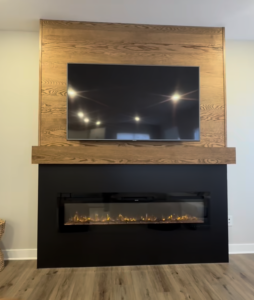
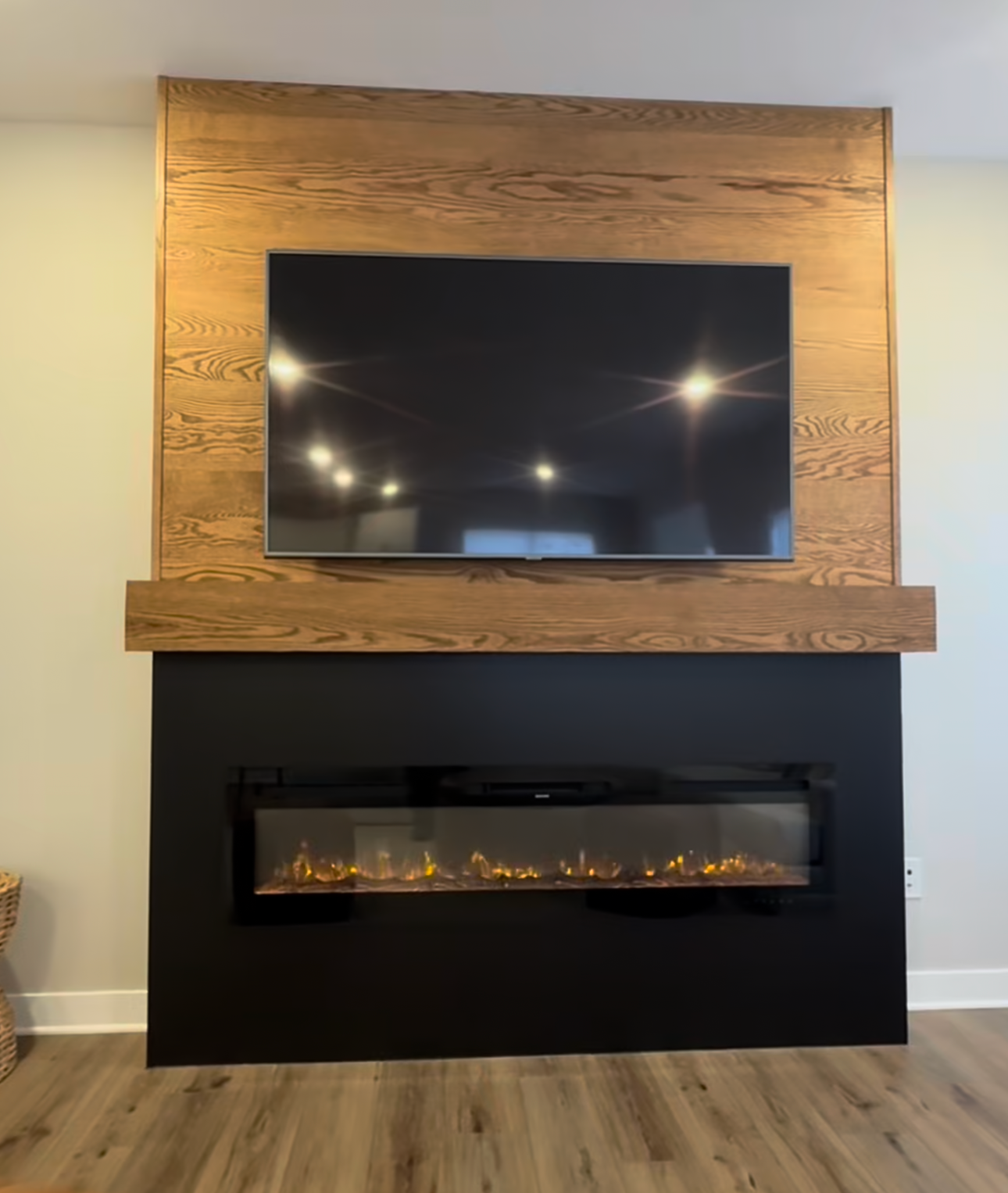
In this living room, the upper surround is wrapped in tongue-and-groove red oak, milled from local Indiana trees. The boards run horizontally, which quietly widens the wall and showcases the grain pattern, while the television sits centered within that field of wood for a clean, built-in look. Below, the smooth black fireplace face aligns with a key direction in current design—minimal trim, dark framing, and linear fireboxes that feel crisp and contemporary.
Fireplace specialists note that these long, horizontal units are dominating interiors, especially in open-concept homes where one wall has to visually anchor the entire room. The dark surround also frames the flame effect, amplifying the look of the fire and preventing the TV and fireplace from visually competing. When materials are chosen with this kind of care, the result is a fireplace build-out that works as hard visually as it does functionally.
Red oak brings warmth and authenticity to the upper portion of the wall. The wood’s natural grain patterns add texture without needing decorative moldings or extra ornamentation. The stain finish brings out the variations in the wood, turning the material itself into a feature. This approach respects the principle that good design doesn’t need to shout—it just needs to be well-executed.
2. The Case for Tongue-and-Groove Red Oak in a Fireplace Build-Out
Natural wood remains one of the most requested materials for fireplace build-outs because it instantly warms up modern interiors. Red oak is especially well suited to this role: it takes stain beautifully, reveals a pronounced grain, and carries the kind of visual weight homeowners associate with quality millwork. When boards are tongue-and-groove, they lock together tightly, creating a flat, stable surface with consistent shadow lines.
Manufacturers and millwork shops point out that tongue-and-groove cladding has additional practical benefits around a fireplace wall. It allows for slight seasonal movement without visible gaps, creates clean transitions at corners, and supports a flush, modern profile when paired with minimal trim. By sourcing red oak from Indiana trees, this build-out also taps into a broader movement toward local materials and region-specific craftsmanship.
The result is a surround that feels rooted to place. It doesn’t look like a generic wall kit purchased online and assembled in an afternoon. It reads as something designed for this home, in this part of the country, with this client in mind. That level of customization is what separates a fireplace build-out from a standard mantel installation. Every board is selected, every joint is tight, and every finish coat is applied with the kind of attention that shows up in the final product.
Red oak is also known for its strength and dimensional stability. It’s a dense hardwood that stands up well to seasonal humidity changes, which is critical in Indiana where we experience humid summers and dry winters. The wood won’t warp, shrink, or buckle over time when it’s properly installed and finished. That durability means the fireplace build-out will look just as good in ten years as it does the day it’s completed.
3. Clean Lines, Balanced Proportions, and a Fully Integrated Feature Wall
Fireplace designers emphasize that the most successful projects now treat the entire wall as a single composition. Floor-to-ceiling finishes, aligned sightlines, and carefully scaled fireboxes make the feature feel intentional and architectural rather than tacked on. In this fireplace build-out, several details work together to create that sense of balance.
The black lower section and the oak upper surround meet at a single strong horizontal line that doubles as a mantel shelf, visually tying the two materials together. The TV is proportioned to sit comfortably within the oak field, leaving consistent margins on all sides so the screen feels framed rather than floating. The electric fireplace stretches horizontally across the black base, echoing current preferences for wide, low fireboxes that anchor larger rooms.
Fireplace trend reports note that in 2026, the strongest designs are often the simplest: flat planes, minimal trim, and a clear hierarchy where fire, not fussy molding, takes center stage. This build-out follows that logic while still honoring traditional warmth through the wood species and the hand-applied finish. The design doesn’t rely on heavy corbels, ornate mantels, or decorative columns. It relies on proportion, material quality, and clean execution.
Because the wall was designed as a complete system—TV, wood surround, mantel, black face, and electric unit all working together—it avoids the stacked look that can happen when components are added one at a time. Instead, you get a single, cohesive feature that feels like it belongs to the house. Taller fireplace walls are becoming more common, especially in homes with high ceilings, because they draw attention upward and make the fireplace feel more integrated with the space’s architecture.
Why a Tailored Fireplace Build-Out Beats a Cookie-Cutter Wall
Retailers are seeing a rise in plug-in, wall-hung electric fireplaces that can be mounted like TVs, but they also note that these units rarely deliver the same architectural presence as a custom build-out. They add ambiance, but they don’t reshape the room. By contrast, a project like this one changes how the entire space functions and feels. The fireplace becomes the organizing principle for the furniture layout, the color palette, and even the lighting design.
Design forecasts for 2026 point out that floor-to-ceiling fireplace walls are now considered the new standard in many living areas. They draw the eye upward, visually organize open-plan layouts, and help define zones without adding walls. When you combine that architectural scale with carefully chosen materials—local red oak, a dark modern base, a linear firebox—you end up with a focal point that looks custom at a glance.
That’s the real value of a thoughtful fireplace build-out: it reflects the homeowner’s taste, respects the architecture, and still aligns with current design directions so the room feels fresh instead of trendy-for-a-minute. This project in Westfield accomplishes all three. It honors the warmth of traditional craftsmanship through the red oak. It respects modern aesthetics through the clean lines and dark lower section. And it creates a feature wall that will age gracefully because the design is rooted in good proportion and quality materials, not passing fads.
Thinking About Your Own Fireplace Build-Out?
If your living room wall currently holds a basic TV stand or a small firebox that feels lost, a fireplace build-out is one of the most effective ways to give that space purpose. Whether your style leans modern, traditional, or somewhere in between, the right mix of materials, proportions, and detailing can turn a flat wall into the feature your home has been missing.
At Radford Woodworks, we approach every fireplace build-out as a collaboration. We listen to how you use the room, what materials speak to you, and what your vision looks like when it’s fully realized. Then we bring the craftsmanship, the local materials, and the attention to detail that turn that vision into something you’ll be proud to gather around for years to come.
If you’re looking for a feature wall that feels custom, not cookie-cutter, let’s build something that checks every box in your home too. Reach out to us at (317) 739-8555 or visit https://radfordwoodworks.com/contact/ to start the conversation. We’d love to hear what you have in mind and show you what’s possible when modern lines meet traditional warmth in a fireplace build-out built just for you.