
Have a seat. Stay a while. Designed to be seen. Built to be lived in.
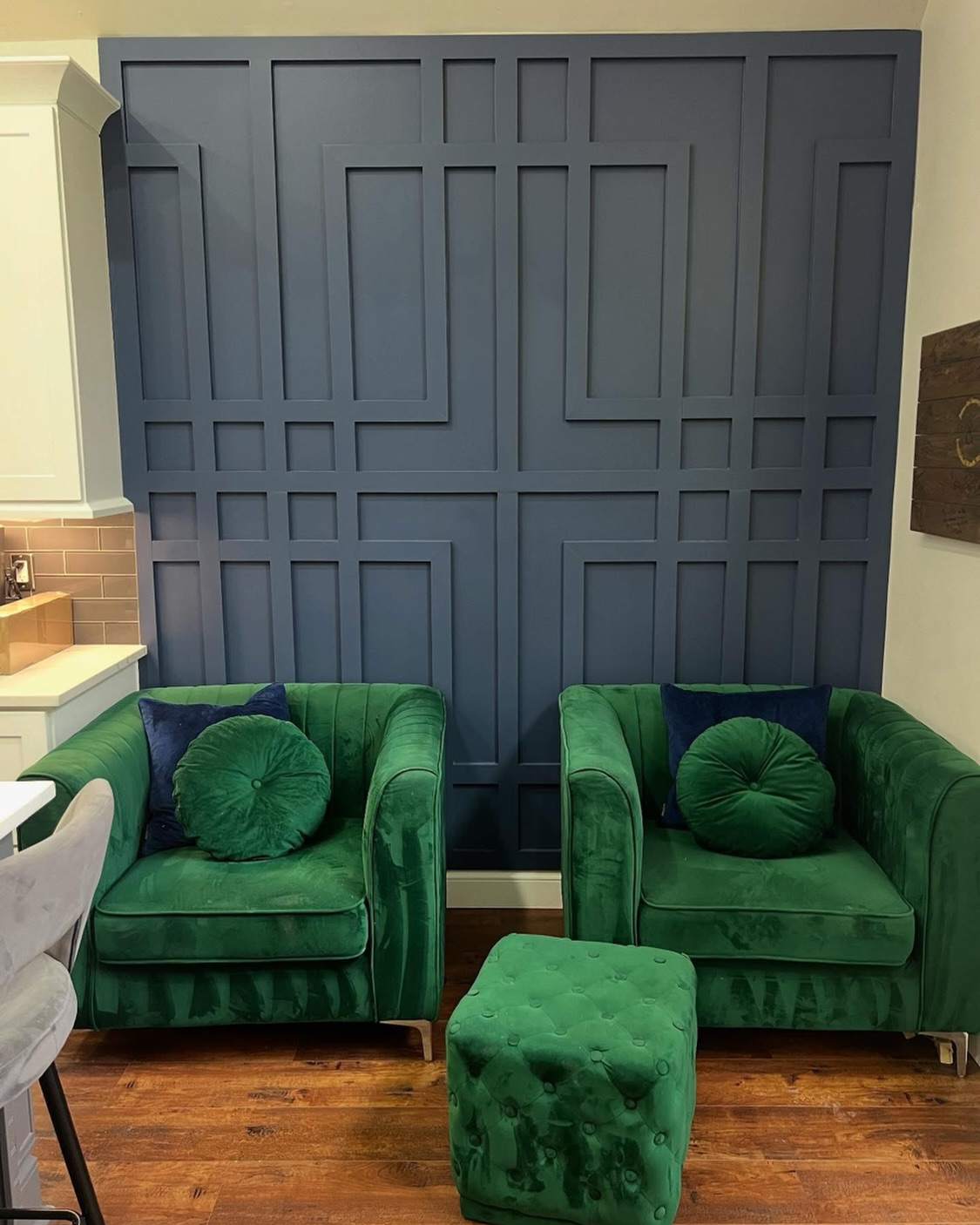
Picture this: you walk into a room, and the wall doesn’t just sit there—it welcomes you. The deep blue geometric paneling pulls your eye with clean symmetry, framing green velvet seating that begs you to sink in. Cushions plump against crisp lines, wood tones warm the edges, and everything feels composed yet comfortable. This isn’t decoration. It’s invitation.
Accent walls work this way because they do more than change color—they change behavior. They make rooms feel finished, intentional, and ready for real life. The photo you shared captures this perfectly: a living room where the wall becomes the conversation starter, the gathering point, the reason people linger.
The Geometry That Makes Rooms Feel Right
That grid pattern isn’t random. The clean rectangles and precise spacing create visual rhythm that guides the eye naturally across the wall. Each panel measures proportionally to the room’s scale, creating balance that feels stable rather than busy. The dark blue absorbs light softly, letting shadows define depth without harsh contrast.
Notice how the panels align with furniture edges. The vertical lines echo the chairs’ legs, the horizontal breaks sit at cushion height, and the overall composition frames the seating area like natural architecture. This isn’t coincidence—it’s proportion working at human scale. When walls relate to furniture this way, rooms stop feeling like collections of objects and start feeling like composed spaces.
The wood trim adds another layer. Rather than floating against the blue, it grounds the design, creating subtle separation between panels. This detail prevents the wall from reading flat while maintaining the quiet confidence that defines good modern design. Green furniture pops against the blue because the wall provides structure, not competition.
Color That Welcomes Rather Than Overwhelms
Deep blue walls carry weight, but here they work because the tone stays sophisticated rather than heavy. The color reads as moody backdrop that makes furniture and art feel more vivid without dominating them. Blue-green combinations like this appear throughout 2026 design for their ability to feel both energizing and restful.
The green seating provides perfect counterpoint. Rather than clashing, the colors harmonize because both sit in the cool spectrum. Olive and navy create natural balance—the green cushions feel grounded against the blue wall, while the blue provides depth that makes the green feel richer. This pairing works across styles because it follows principles of analogous color harmony.
White trim acts as the referee, keeping both colors in balance. The crisp lines prevent the wall from becoming too dark while allowing furniture to stand forward. When done well, color relationships like this make rooms photograph beautifully while feeling comfortable in person—a rare combination.
Built for Life, Not Just Looks
Details like this wall endure because they’re practical as well as beautiful. The geometric pattern provides subtle texture that hides minor scuffs from daily use. The darker color forgives fingerprints and marks better than light walls. The symmetry creates natural boundaries for furniture placement, making the room feel organized even as life happens.
The design supports gathering because it frames seating naturally. Guests orient toward the wall instinctively, creating conversation flow without awkward furniture arrangement. The integrated wood tones warm the space, preventing the blue from feeling cold while the geometry keeps everything crisp.
This approach scales to different room sizes. In smaller spaces, tighter panel spacing maintains proportion. In larger rooms, wider grids preserve impact without overwhelming. The principles—rhythm, balance, practical color—translate universally, which is why this treatment works across new construction great rooms in Carmel, Westfield, Fishers, and beyond.
The Craftsmanship Behind the Calm
Every reveal, every joint, every shadow line shows intent. The panels aren’t just painted rectangles—they’re assembled with precision that reveals itself under scrutiny. Wood trim sits flush against the blue, paint edges remain sharp, and proportions feel mathematical rather than guessed.
This level of execution comes from planning the wall as architecture, not decoration. The geometry responds to the room’s actual dimensions, the color to its light patterns, the materials to how the space gets used. When everything aligns this way, the result looks effortless because the effort went into decisions that aren’t immediately visible.
Notice the ottoman placement. It sits comfortably centered because the wall composition naturally defines the space. Chairs flank symmetrically because the panels invite that arrangement. The room works because the wall works—and it works because someone planned it to.
Why Accent Walls Like This Change Rooms
Most accent walls announce themselves. They demand attention with bold pattern or saturated color. This wall does the opposite—it supports everything else by providing structure, depth, and balance. It becomes the room’s foundation rather than its exclamation point.
The deep blue provides weight that tall ceilings need. The geometry creates interest without distraction. The furniture arrangement feels inevitable rather than forced. Guests naturally gather here because the space feels composed.
In new construction across the northside, where open plans sometimes feel too open, walls like this restore proportion. They ground furniture, frame views, and make rooms feel finished. The result is a living room that photographs well, hosts well, and lives well.
What Makes This Design Last
Trends fade, but proportion endures. The geometry follows mathematical relationships that work across eras. The color palette stays relevant because it balances cool depth with warm wood tones. The execution prioritizes longevity over flash.
Children grow up, furniture changes, art rotates—but the wall remains. It supports new sofas when you redecorate, frames family photos as they accumulate, and holds the room together through seasons. Accent walls that prioritize structure over style create homes that age gracefully.
Ready to design something that fits YOUR home perfectly?
📲 Message Radford Woodworks to get started.