
When buyers step through your front door in 2026, they don’t stop at the entryway. They move directly up—to your stairwell. According to Yelp’s 2026 Trend Forecast and market analysts across the country, statement staircases have officially replaced outdoor curb appeal as the most impactful architectural feature in home sales. The stairwell is now an “interior front door,” as custom staircase builders describe it. It sets the emotional tone for everything that follows.
If your stairwell has been a blank canvas—white drywall, builder-grade trim, minimal character—you’re missing an opportunity to make a powerful statement about your home. That’s where custom stairwell trim design enters the conversation. Specifically, soft plaid wainscoting layouts have emerged as the defining design detail of 2026, turning functional staircases into architectural centerpieces that buyers notice, remember, and want to own.
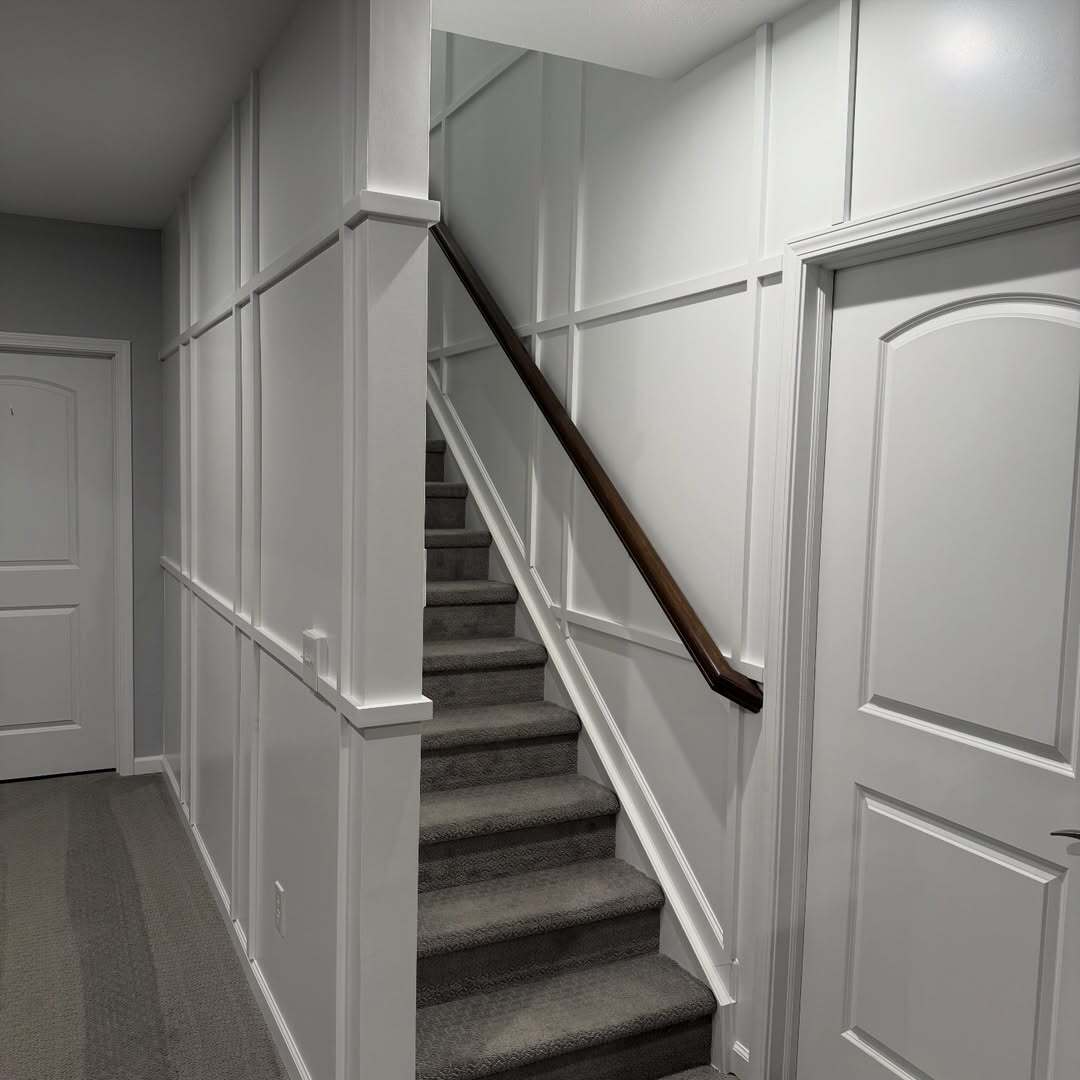
Radford Woodworks recently completed a stairwell transformation that demonstrates exactly why this trend matters. A blank, uninspired staircase became a stunning architectural focal point through meticulous plaid wainscoting, custom trim carpentry, and a layer of intentionality in every line. The result? A space that feels gift-wrapped from the inside out.

Why Stairwells Have Become the Centerpiece of Luxury Homes
For decades, staircases were afterthoughts. Functional. Utilitarian. Overlooked during home tours. That mindset has shifted completely.
Real estate experts now point out that staircases occupy prime real estate in most homes—often double-height, centrally located, and visible from multiple rooms. They’re the first major architectural element people encounter, and that first impression carries weight. As Frances Katzen, a real estate strategist, explains: “The staircase is one of the most impactful visual elements within a residence, establishing the mood for everything that follows.”
This shift isn’t just about aesthetics. It’s about perceived value. According to millwork specialists, custom trim carpentry and architectural details on staircases directly influence a buyer’s assessment of overall home quality. When a stairwell is finished with precision—with caulked seams, painted trim lines, carefully spaced grid patterns—it communicates craftsmanship before a single other room is seen.
Plaid Wainscoting: The Design Detail That Creates Visual Authority
Among the wainscoting styles gaining traction, soft plaid layouts stand out for their versatility and impact. Unlike solid wainscoting or simple board-and-batten designs, plaid patterns create visual rhythm and structure. They add depth and intentionality to a space that might otherwise feel plain.
The “soft plaid” approach—achieved through carefully measured grid lines in neutral whites, creams, or soft grays—works beautifully in both traditional and contemporary homes. The pattern creates visual complexity without appearing busy. Each line is placed with purpose, forming rectangular grids that draw the eye upward and create a sense of architectural sophistication.
What makes plaid wainscoting particularly effective on staircases is how it interacts with light. As sunlight moves throughout the day, shadows play across the grid lines, creating subtle movement and depth. At night, with proper lighting, the lines read as crisp architectural definition. This is precision carpentry at work—the kind that takes hours to measure, cut, and install correctly.
The Hunters of Happiness plaid bathroom project documented 12+ hours of cutting and nailing, 9 hours of caulking, and an additional 3+ hours of sanding and finishing to achieve that seamless, polished look. Stairwell projects typically require similar or greater time investment due to the vertical complexity and the need for perfect angles at each stair.
The Transformation: From Blank Canvas to Statement
In Radford Woodworks’ recent stairwell project, the starting point was straightforward: a functional but uninspired space. White walls, builder-grade railings, no architectural character. The space served its purpose—moving people between floors—but it created no emotional response.
The transformation involved several key steps:
Measurement and Layout: Every grid line was measured and marked with precision. The spacing had to remain consistent across the vertical plane, accounting for the slope of the stairwell and any architectural obstructions.
Custom Trim Installation: 1×2 pine boards were cut to exact specifications, then installed vertically and horizontally to create the plaid pattern. Each board required careful nailing and alignment.
Finishing Details: All nail holes were filled, seams were caulked, and surfaces were sanded smooth to create that seamless, high-end appearance. The white paint was applied with precision, making each line pop.
Railing Integration: The custom stairwell trim was designed to work in harmony with the railing and newel post, creating a cohesive architectural statement rather than isolated design elements.
The result was a stairwell that stopped people mid-stride. Instead of a functional pass-through, it became a destination—a place worth photographing, worth discussing, worth remembering.
How Custom Stairwell Trim Design Impacts Home Value
The connection between statement staircases and home value is now well-documented. Real estate agents report that homes with thoughtfully designed staircases tend to have shorter time on market. Buyers respond emotionally and immediately to the quality and craftsmanship conveyed by custom trim work.
But the value extends beyond the sale price. It influences perceived luxury. When someone walks into a home and the first thing they see is a beautifully executed plaid wainscoting pattern with crisp white trim, they make an immediate assessment: this home is well-maintained, the owner cares about details, quality craftsmanship was invested here.
Architectural millwork specialists note that custom stair treatments specifically impact this perception. Stair treads, risers, railings, and wall treatments all work together to create an impression of intentionality and investment. A blank stairwell—even in a new home—reads as incomplete. A finished stairwell reads as complete, curated, and worthy of attention.
2026 Design Principles Applied to Stairwell Carpentry
The 2026 design direction emphasizes several key principles that apply perfectly to stairwell projects:
Material Honesty: The wood and paint should feel authentic, not over-decorated. Soft plaid wainscoting succeeds because it relies on precision geometry, not elaborate ornamentation. The beauty comes from perfectly executed lines and clean surfaces.
Visual Rhythm: Plaid patterns create rhythm through repetition. The human eye responds to pattern and finds it satisfying, especially when the execution is flawless.
Vertical Movement: In a stairwell, the eye naturally travels upward. Trim carpentry that emphasizes vertical lines (or creates geometric patterns that guide the eye up) works with the natural flow of the space rather than against it.
Functional Beauty: Every element should serve a purpose. The trim isn’t there simply to be decorative—it’s there to define spaces, create visual flow, and add architectural interest that feels intentional.
Investment in Professional Craftsmanship
Custom stairwell trim design is not a DIY project for most homeowners. While the concept might seem straightforward—measuring, cutting, painting—the execution requires precision that separates amateur results from professional-grade work.
The difference lies in:
-
Perfect Spacing: Every grid line must be equidistant and level. Even slight variations become obvious over a vertical expanse.
-
Seamless Joints: Professional-grade caulking, wood filling, and finishing create a look of seamlessness that’s difficult to achieve without experience.
-
Strategic Lighting: The placement of light sources affects how the trim reads. Professional installers consider lighting in their design.
-
Stairwell-Specific Challenges: Angled walls, varying floor heights, railing integration—each stairwell presents unique challenges that require architectural problem-solving.
When done right, custom stairwell trim work feels inevitable, as though it was always meant to be there. When done poorly, it looks labored and awkward.

Beyond the Stairwell: Full-Home Integration
The power of statement stairwell carpentry multiplies when it’s part of a larger design vision. Radford Woodworks’ approach integrates stairwell trim with:
-
Entry hallways and foyer details
-
Stair runner selections and installation
-
Railing and newel post designs
-
Adjacent wall treatments and accent features
-
Overall architectural style and period references
This integrated approach ensures that the stairwell doesn’t feel like an isolated design moment but rather the first chapter of a larger design story that flows through the entire home.
Making the Decision for 2026
If your home has been waiting for its moment, 2026 is the year to invest in custom stairwell carpentry. Whether you’re building new, completing a renovation, or simply ready to transform an overlooked space, a professionally designed plaid wainscoting stairwell offers:
-
Immediate visual impact
-
Increased perceived home value
-
A focal point that works for both daily living and future resale
-
Craftsmanship that communicates quality
-
A design feature that photographs beautifully and creates memorable first impressions
The blank canvas is ready for transformation. The question isn’t whether to invest in stairwell design—it’s whether you’re ready to let it become the statement piece your home deserves.
Your Next Step
A stairwell transformation starts with a conversation about your space, your vision, and the architectural opportunities in your home. Whether you’re in Westfield, across central Indiana, or anywhere you’re ready to invest in custom trim carpentry, we’re ready to listen, measure, and design something remarkable.
Reach out today for a quick consultation about your stairwell project. Fill out our contact form or give us a call—let’s talk about turning your blank canvas into the architectural centerpiece your home has been waiting for.