Most entryways do one of two things: they make a quiet first impression, or they make no impression at all. Builders know how to frame a foyer. They know where to put the front door, where to drop the ceiling height, and where to run the hardwood floors. What most builder-grade entryways don’t do is make you stop. They don’t make you look twice, look up, or feel like you’ve walked into a home that has a point of view.
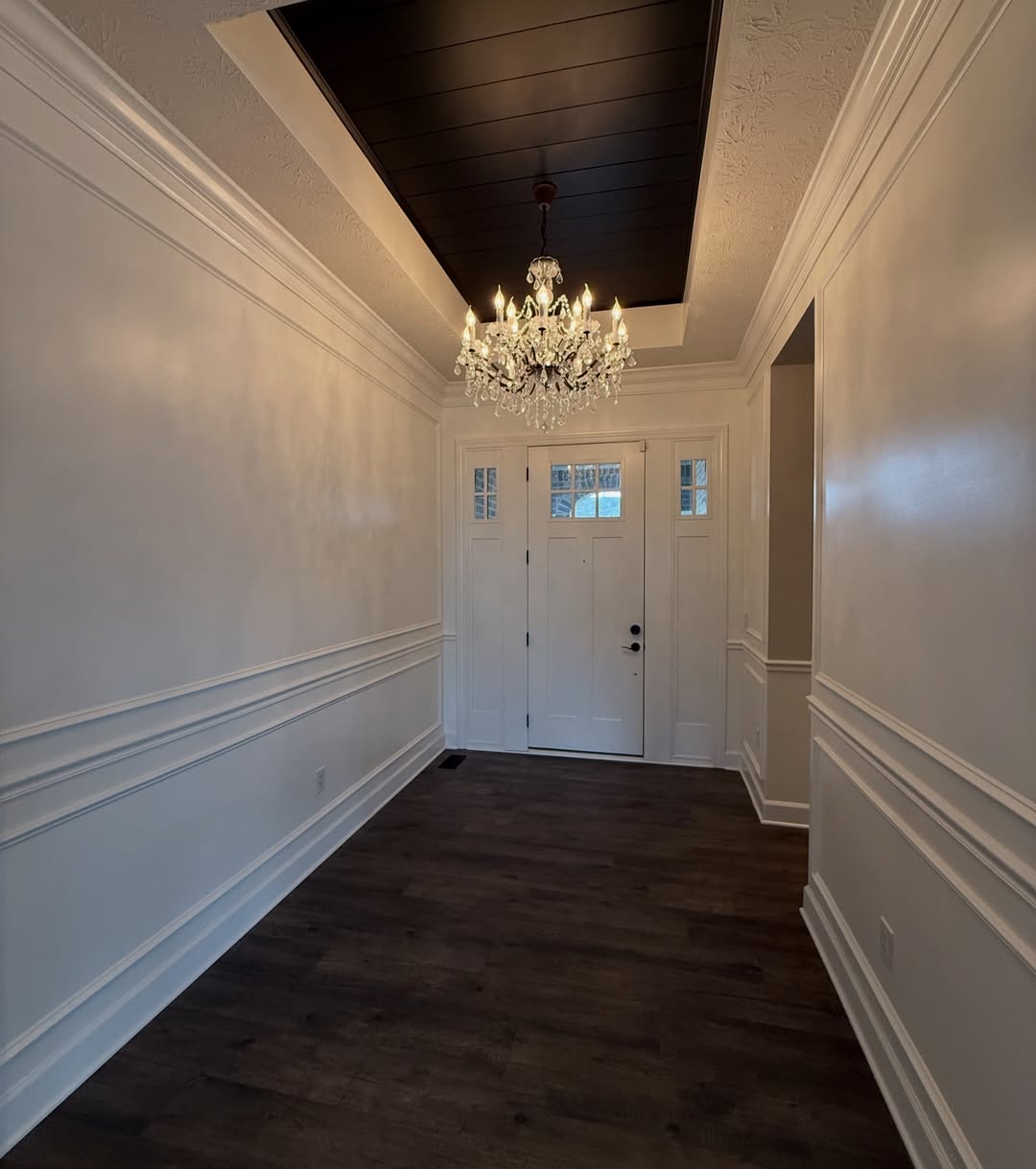
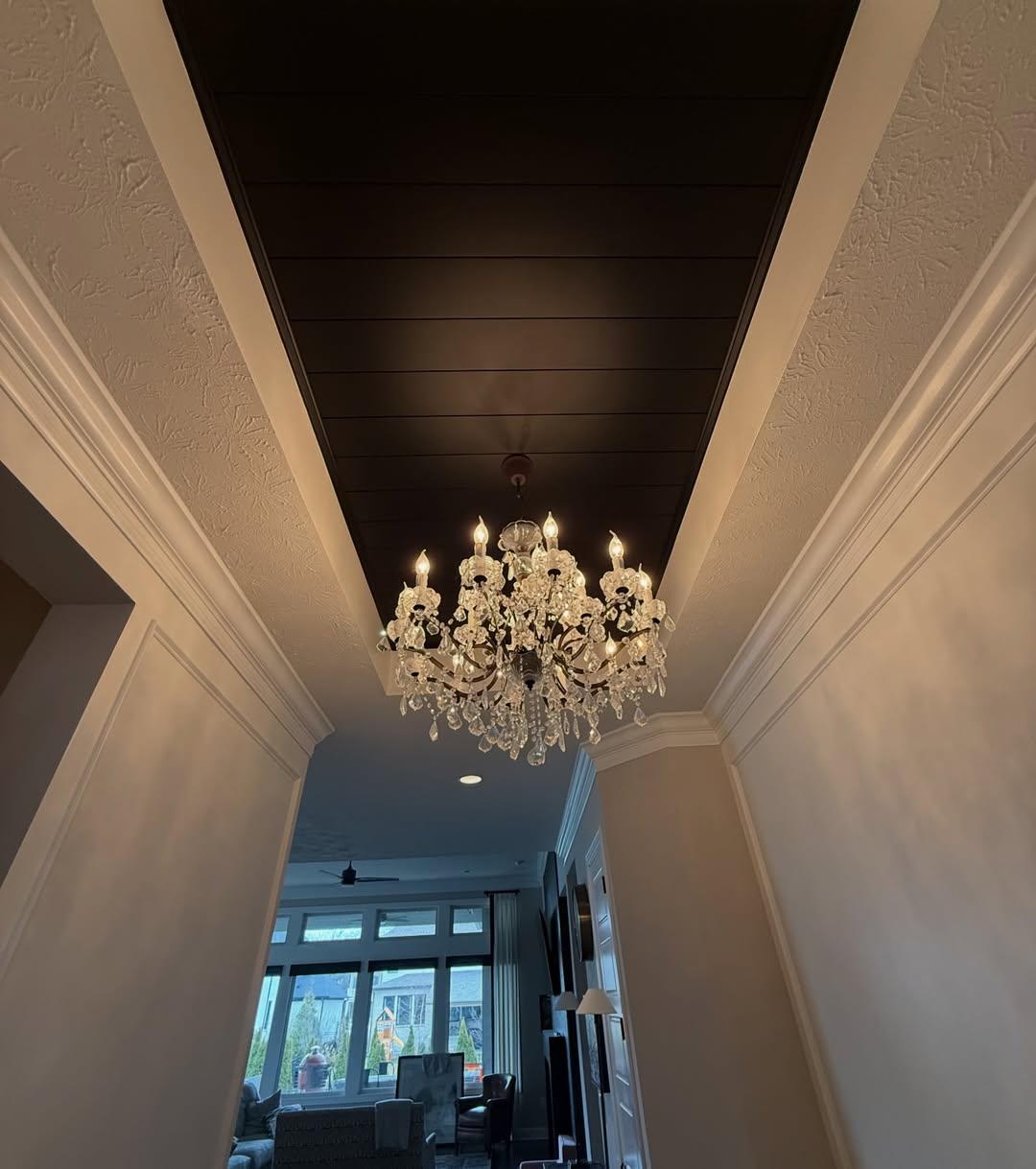
This entryway in Carmel, Indiana changed that completely. The client came in with a clear intention — go bold, mix styles, and build something that nobody else on the street has. A black shiplap ceiling. Custom picture frame molding on the walls. Wainscoting carried down the hallway at a deliberately lower height to honor the proportions of a narrower space. And a crystal chandelier that ties every element together with exactly the right amount of drama. What started as a standard foyer became the kind of entryway that sets the tone for an entire home.
Why the Entryway Is the Most Important Room to Get Right
The entryway is the room every single person who walks through your front door experiences first. It’s not the kitchen, which most guests eventually see. It’s not the living room, which has the best furniture. It’s the foyer — the transitional space between the outside world and the private life of your home. And yet, in most homes, it receives the least design attention of any room on the main level.
That imbalance has a cost. When the entryway feels plain, the entire home’s first impression suffers before anyone has seen a single room beyond it. Guests arrive with a feeling — whether it’s wonder, comfort, or indifference — that colors how they perceive everything that follows. The entryway sets the expectation. If it sets a low one, every other room in the house has to work harder to overcome it.
Custom millwork changes that dynamic entirely. Picture frame molding, wainscoting, architectural ceiling treatments, and considered lighting choices turn a functional transition space into an architectural statement. In 2026, homeowners across Central Indiana are increasingly choosing to invest in the entryway as the first priority in a whole-home upgrade, specifically because they understand the outsized return that a well-designed foyer delivers relative to its square footage. This Carmel project makes that argument in one walk through the front door.
1. Black Shiplap Ceiling — The Entryway Detail That Changes Everything About the Room
The black shiplap ceiling is the most arresting design choice in this entryway, and it’s the one that required the most confidence. Dark ceilings carry a well-earned reputation in design circles for their ability to make a room feel more dramatic, more intimate, and more considered — but only when the execution is right. In a foyer with white walls, white molding, and dark hardwood floors, a black shiplap ceiling creates a contrast that is genuinely striking without tipping into oppressive or heavy.
Shiplap applied to the ceiling rather than the walls is a decision that rewards the eye in multiple directions. The horizontal lines of the shiplap draw attention across the ceiling plane, making the room feel wider. The dark stain finish gives the ceiling a sense of receding depth, making it feel higher than its actual dimension. And the natural wood grain of the shiplap boards, visible even through the dark finish, adds texture that flat painted drywall could never produce. The ceiling becomes an active participant in the room’s design rather than a passive surface overhead.
The crown molding border framing the shiplap insert is the detail that makes the ceiling feel architectural rather than simply bold. The white crown creates a clean, crisp edge between the dark shiplap and the surrounding textured ceiling, giving the insert a defined boundary that reads as intentional and considered. Without that border, the dark ceiling could feel incomplete. With it, the whole treatment looks like it was drawn into the original architectural plans — which is precisely the standard every Radford Woodworks installation is measured against.
2. Picture Frame Molding — Why Proportion and Scale Define the Finished Result
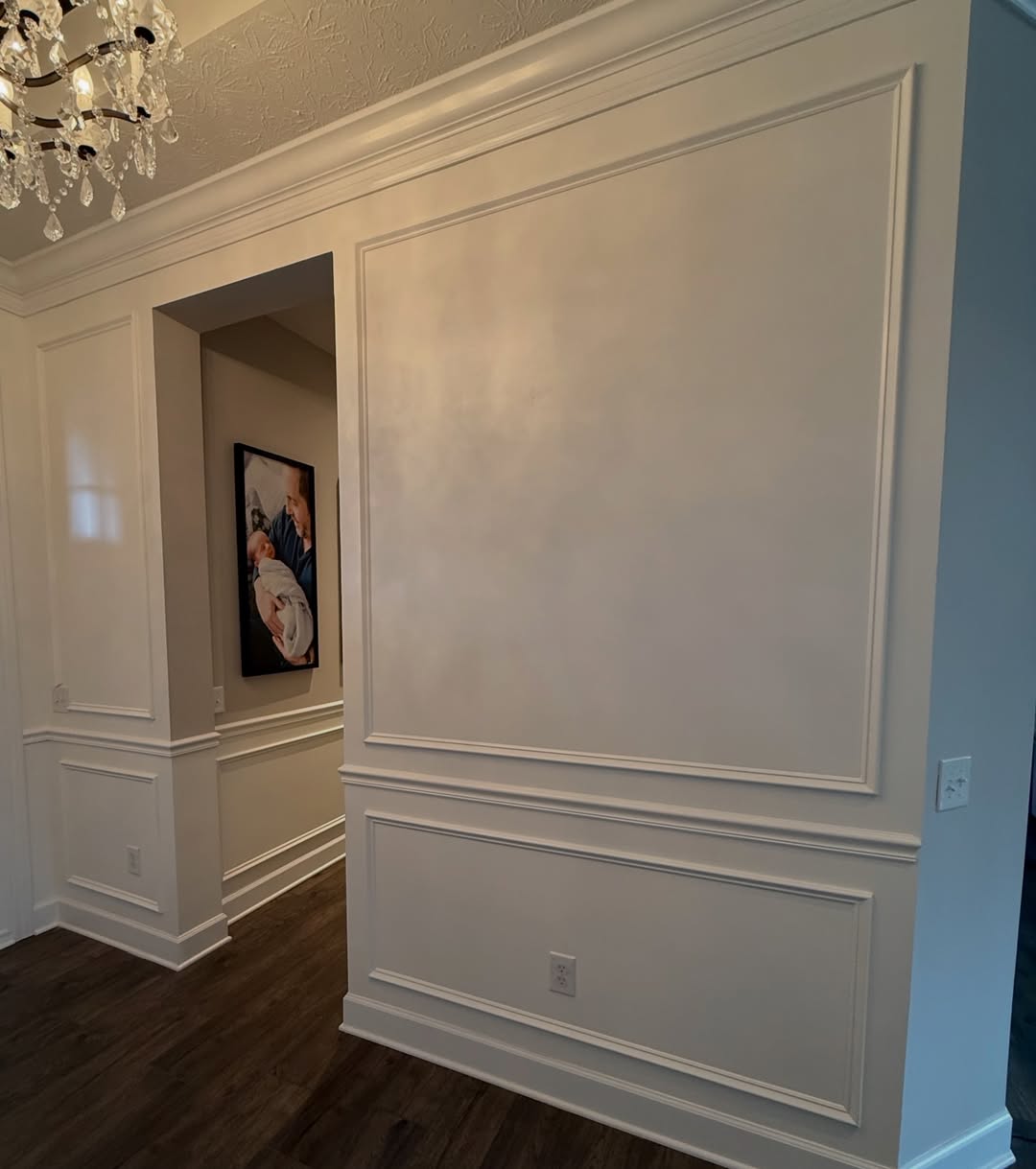
The picture frame molding on the entryway walls carries the architectural weight of the space from floor to ceiling. Installed in a full-height grid that covers the walls from the baseboard up to the crown, the molding divides each wall surface into a series of precisely proportioned rectangular frames that give the room visual structure and depth without adding color contrast. The entire surface — frames and wall background — is finished in the same warm white, which means the molding reads through shadow and dimension rather than through color difference.
This approach, painting the molding and wall in the same tone, is one of the strongest finishing choices available in residential trim work. Rather than a graphic contrast between the molding and the wall, the result is a surface that feels quietly layered and architectural — sophisticated without being loud. The chandelier hanging at the center of the room bounces light across the molding profiles, making the shadow lines shift throughout the day and keeping the wall visually alive in a way that a flat surface never could.
The scale of the frames in the entryway is calibrated for the height of the space. The upper panels are taller and carry more visual weight, reflecting the soaring ceiling height of the foyer. The lower panels are shorter, sitting comfortably between the chair rail and the baseboard. That hierarchy of scale — larger frames above, smaller frames below — creates a wall composition that feels proportional and complete, not arbitrarily divided. This is the kind of design thinking that separates custom millwork from a product ordered from a catalog and applied without adjustment.
3. Wainscoting Height in the Hallway — The Design Decision Most Homeowners Miss
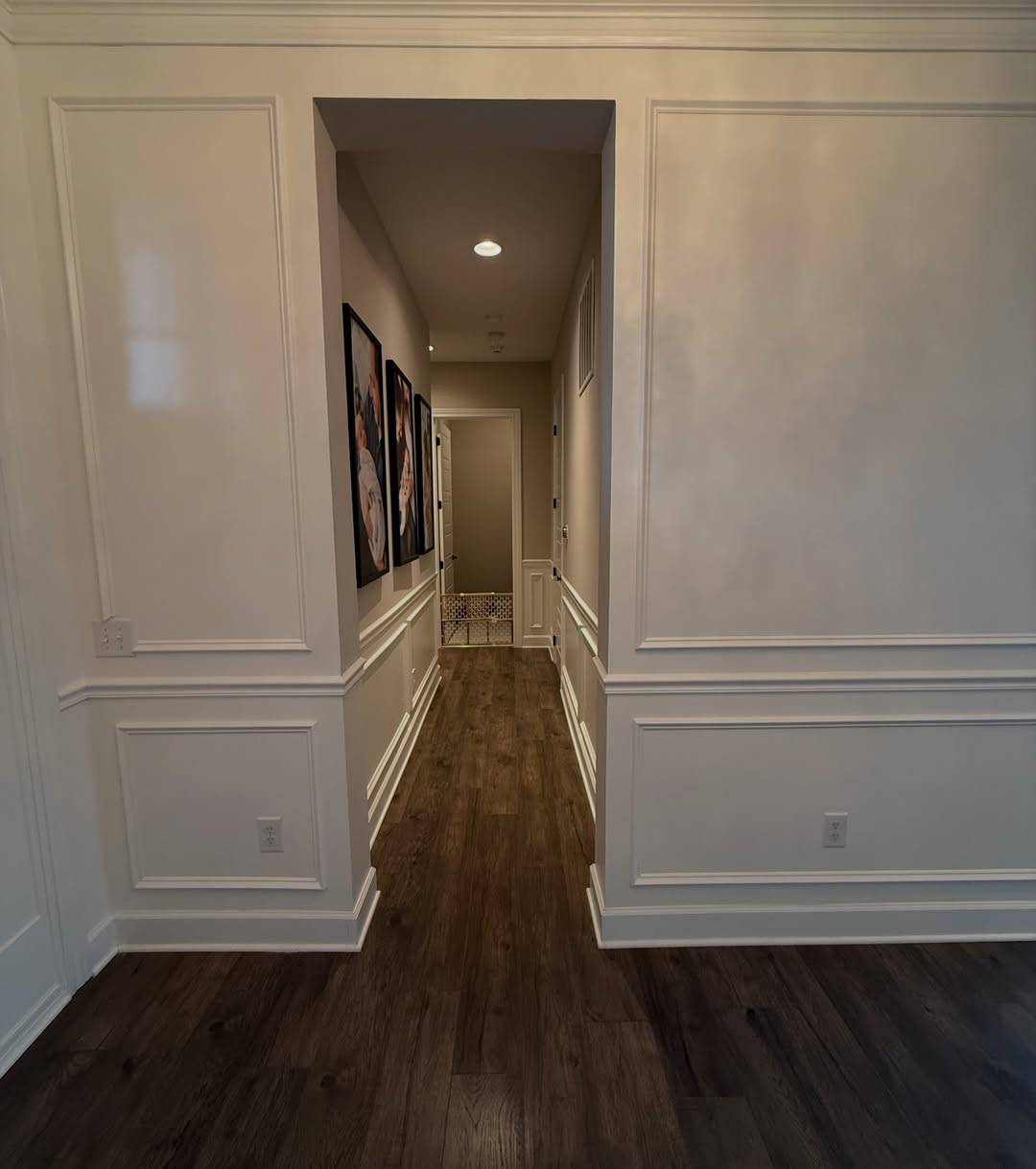
Carrying the wainscoting from the entryway into the adjoining hallway was the right choice. Repeating the same molding language through connected spaces creates continuity that makes the home feel designed as a whole rather than room by room. But continuing the same height into a narrower hallway would have been a mistake, and this project gets that distinction exactly right.
The traditional rule of thumb for wainscoting height is to cover one-third to one-half of the wall’s total height, with standard residential rooms calling for somewhere between 32 and 42 inches for eight-foot ceilings. In a formal entryway with generous ceiling height, going higher with the molding is a natural choice — it fills the wall appropriately and honors the scale of the space. But in a narrow hallway, higher wainscoting has the opposite effect of what’s intended. Instead of adding architectural richness, it compresses the walls visually and makes the passage feel tighter and more constrained.
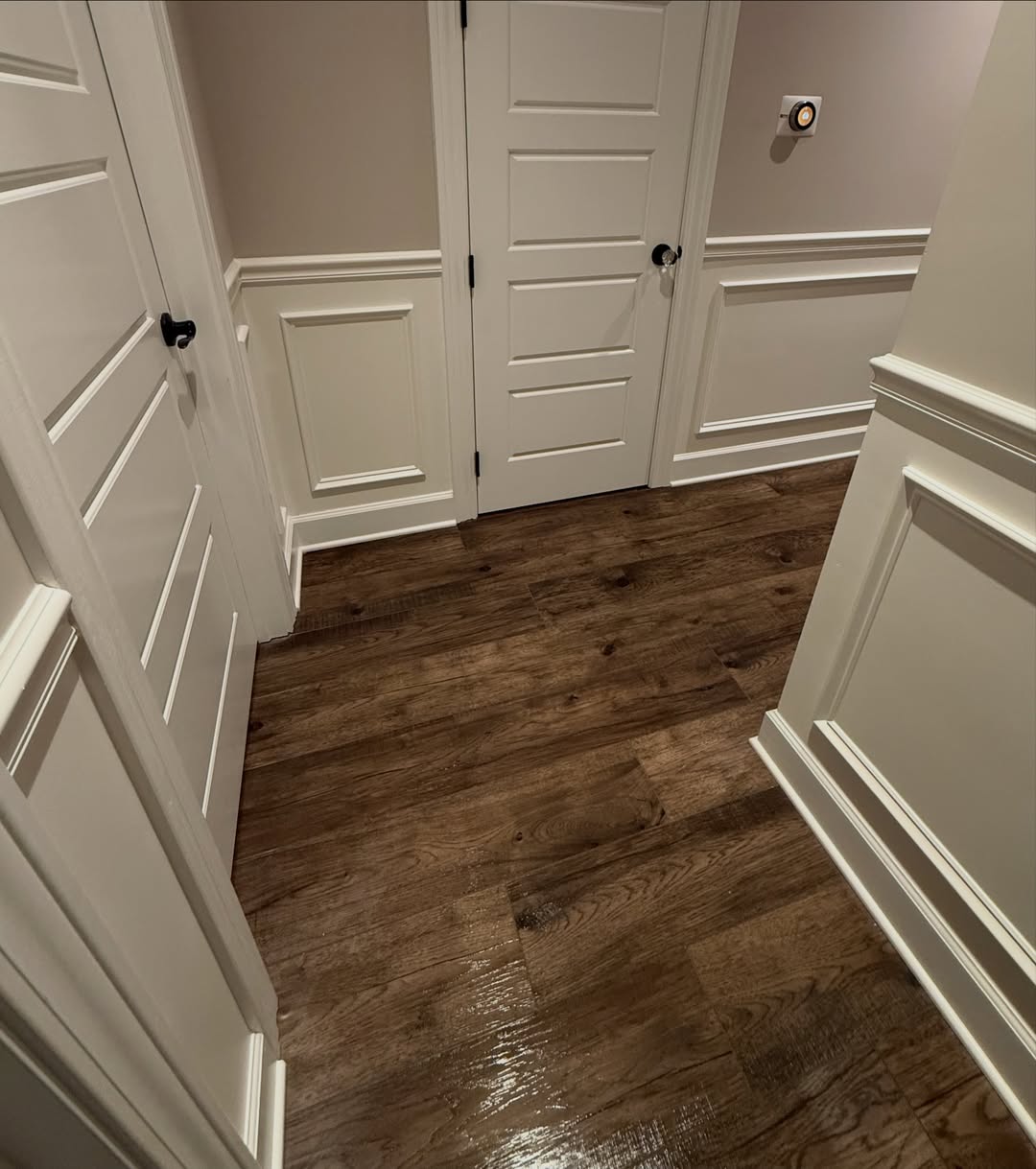
Dropping the wainscoting height in the hallway to a lower, more traditional placement — aligned closer to chair rail height — solves that problem directly. The lower treatment keeps more of the upper wall open, which allows the eye to travel above the molding rather than being stopped by it. The hallway reads as wider than it actually is because the vertical breathing room above the wainscoting gives the impression of space that tighter molding would close off. It’s a proportional decision rooted in architectural logic, and the difference between getting it right and getting it wrong is the difference between a hallway that feels considered and one that feels crowded.
4. The Chandelier — When the Right Fixture Honors the Craft Around It
A light fixture can make or break a room that has been built to a high standard. The wrong fixture in a well-trimmed entryway looks like an afterthought — as if the room was finished and then someone picked a light online without thinking about whether it belonged. The right fixture becomes part of the design conversation, reinforcing the aesthetic decisions made on the walls and ceiling and giving the room a central focal point that holds everything together.
The crystal chandelier in this entryway is exactly right. Its scale matches the height and width of the foyer, so it fills the visual center of the room without overwhelming it. The warm brass hardware connects to the black shiplap ceiling above without competing with it, because the metal reads as a warm accent against the dark field rather than a contrasting element. The crystal drops catch and refract the light from every direction, which brings the white picture frame molding and crown work into relief and makes the whole room sparkle in a way that a simpler fixture never could.
Lighting in a custom entryway is not a finish decision — it’s a design decision. The fixture needs to be chosen alongside the wall treatment, the ceiling material, and the architectural proportions of the room, not after them. When those choices are made together, as they were in this Carmel project, the result is a room where nothing feels selected in isolation. Every element supports every other element, and the finished space feels genuinely complete.
When a Home Leaves Better Than You Found It
There’s a moment at the end of every Radford Woodworks project that says something about who we are. The tools are packed. The job is done. And before we leave, we Swiffer the floors clean so the homeowner walks back into their space — whether it’s an entryway, a hallway, or an entire main level — to find it better than when we arrived. Not just architecturally better. Actually cleaner, actually cared for, actually treated with the same respect we give the woodwork itself.
That’s not a policy. It’s a value. The same attention that goes into measuring a frame layout or selecting a molding profile goes into how we leave every home we work in. The client in Carmel trusted us with their front door — the first thing their family, their friends, and every guest they’ll ever have sees when they arrive. We don’t take that lightly.
The finished entryway speaks to what’s possible when a homeowner decides to stop accepting builder-grade and start building something worth walking into. A bold ceiling choice that most people would hesitate on. Wall molding installed with precision and painted with care. Wainscoting heights that were adjusted for the specific geometry of each connected space. A fixture that was chosen to honor the room around it. These are the decisions that turn a house into a home worth being proud of.
If your entryway is ready for that kind of attention, we’d love to be the team that builds it. Call us at (317) 739-8555 or visit radfordwoodworks.com/contact — we’re always glad to walk a space with you and talk through what’s possible.