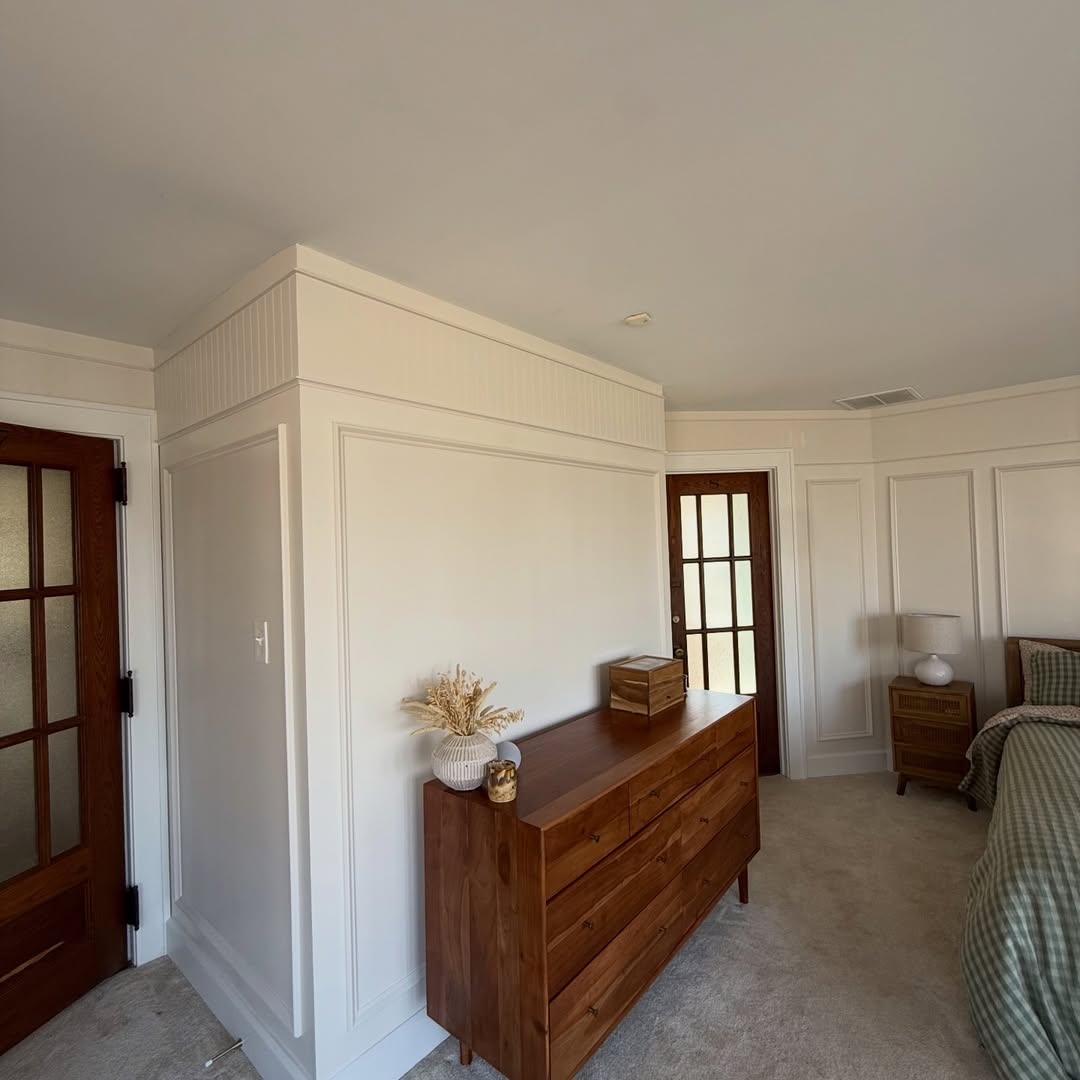
Molding has a way of changing the temperature of a room. Not the number on the thermostat, but the feeling that greets you when you step inside. In this dream primary suite by Radford Woodworks, the molding does not fight for attention. It settles the space. It gives the walls shape, rhythm, and a quiet sense of care.
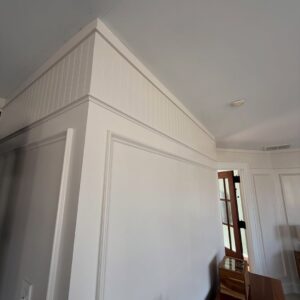
This room overlooks a subtle waterfall that can be heard from inside, and that detail matters. The sound brings a natural calm into the suite before the design even begins to speak. From there, the layered wall treatment carries the same mood. Picture frame molding gives the walls structure. Beadboard adds a soft vertical texture above it. Cove molding brings a finished transition near the ceiling. The result is clean, intentional, and quietly refined.
This is what simple sophistication should look like. It is not about filling a room with more. It is about knowing exactly where the right detail belongs.
The return of architectural wall detail is not a passing design note. Design publications are pointing to a renewed interest in dressed rooms, with picture frame molding, chair rails, layered crown molding, and traditional trim details becoming more important in current interiors. Bedroom design is moving in the same direction, with moldings, wainscoting, and trim work being used to give newer rooms the character they often lack.
Why Molding Belongs in a Primary Suite
A primary suite should feel different from the rest of the home. It should be restful without feeling empty, polished without feeling cold, and personal without feeling overdesigned. Molding helps create that balance because it gives the room architecture before furniture, bedding, lamps, or styling enter the conversation.
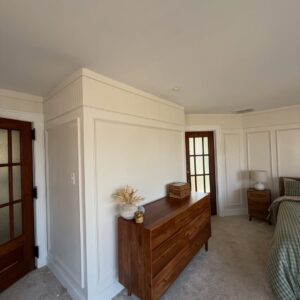
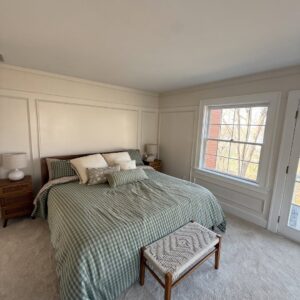
In the photos from this Radford Woodworks project, the room feels complete because the trim carpentry is doing quiet work on every wall. The bed wall has a natural frame. The window wall feels considered. The door casing, baseboards, upper trim, beadboard, and cove molding all speak the same design language. Nothing feels pasted on.
That is the real value of molding. It creates order. It gives a plain wall a sense of proportion. It lets light and shadow move across the surface. It makes a room feel built with intention instead of finished with the minimum.
For homeowners thinking about new construction upgrades, custom walls, accent walls, trim work, crown molding, board and batten, or professional painting, this kind of room is a strong example. The upgrade is not loud. It is lasting.
The 7 Beautiful Ways Molding Gives This Suite Quiet Character
1. Molding Frames the Bed Wall Without Overpowering It
The bed wall is the natural focal point in most primary suites. It holds the largest piece of furniture in the room, so it needs visual weight. The challenge is giving that wall enough presence without making the room feel crowded.
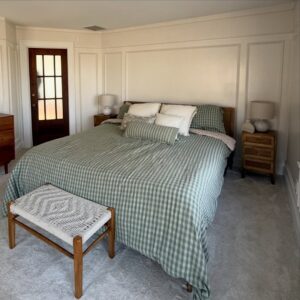
Here, picture frame molding creates that balance. It gives the bed a tailored backdrop while allowing the soft wall color, warm wood furniture, and green bedding to remain calm and collected. The molding becomes a frame around the life of the room rather than a decoration sitting on top of it.
This is one reason picture frame molding continues to work in bedrooms. It adds detail while keeping the room timeless. It can feel traditional, transitional, cottage inspired, or clean and modern depending on the profile, spacing, and paint finish.
For Radford Woodworks, this is the difference between simply adding trim and designing a wall that belongs in the room.
2. Beadboard Adds Texture Above the Picture Frame Detail
One of the strongest choices in this suite is the beadboard above the picture frame molding. It adds texture where a flat upper wall may have felt unfinished.
The vertical lines bring gentle movement. They pull the eye upward without making the ceiling feel busy. They also add a crafted quality that connects well with the wood doors, bedside tables, dresser, and natural view outside the window.
Texture is becoming one of the most important parts of current home design. Architectural millwork trends are moving toward surfaces that feel more tactile, including fluted, reeded, and panel based details that bring depth to walls and cabinetry. Beadboard fits that movement beautifully because it gives the wall texture in a familiar, graceful way.
In this room, the beadboard does not try to be the main feature. It gives the upper wall a finished feel and lets the molding below it carry the structure.
3. Cove Molding Softens the Ceiling Line
The ceiling line can make or break a room. When the wall simply stops at the ceiling, the space can feel plain. Cove molding changes that transition. It softens the edge and gives the room a more complete architectural finish.
In this primary suite, cove molding works especially well because the overall design is quiet. The profile is not heavy or overly formal. It brings enough detail to finish the room without pulling attention away from the restful mood.
Ceilings are receiving more attention in home design now, especially as designers treat them as part of the full room rather than a blank surface. Benjamin Moore’s color capping concept, for example, highlights the use of related tones across walls, ceiling areas, cornices, and architectural features to create a more connected room. Cove molding gives that kind of paint strategy a better foundation because it gives the ceiling transition a clear and handsome edge.
The lesson is simple. A strong room does not stop at eye level.
4. Molding Creates a Natural Accent Wall
Accent walls have matured. The best ones are no longer just a bold paint color behind a bed. Today, a strong accent wall often comes through trim carpentry, molding, paneling, custom cabinetry, built ins, fireplace build outs, or painted woodwork.
This suite shows how molding can create an accent wall without shouting. The bed wall has presence because the wall has been shaped. The molding creates depth. The beadboard adds texture. The soft neutral finish keeps the room peaceful.
Radford Woodworks specializes in custom accent walls, electric fireplaces, hardwood tables, custom cabinets, and more, with a portfolio that shows how woodwork can give a home stronger identity. That same design thinking applies here. An accent wall should support the way a room is lived in. In a primary suite, that means the wall should feel calm, personal, and grounded.
The beauty of molding is that it can be bold or quiet. In this room, quiet was the right choice.
5. Molding Makes a Newer Room Feel More Established
Many newer homes have good layouts, generous windows, and comfortable square footage, but the rooms can still feel unfinished. The walls may be clean, but they do not always have character. That is where molding becomes one of the most meaningful new construction upgrades.
New construction upgrades are often about correcting what standard finishes leave behind. A fireplace wall may need custom built ins. A dining room may need trim work. A stairway may need wall detail. A bathroom may need cabinetry and professional painting. A living room may need floating shelves, a TV wall, or an electric fireplace build out. A primary suite may need exactly what this room received: molding that gives the space depth and permanence.
The right trim carpentry can make a newer room feel like it has history. It gives the home a more settled quality. It tells the eye that the space was not rushed.
Radford Woodworks has written about traditional trim and fretwork as a way to bring character, charm, and value into a home through skilled design and installation. This suite follows that same belief. Good molding does not make a room feel older. It makes it feel better built.
6. Molding Works With Natural Light and Sound
This room has something rare. It overlooks a subtle waterfall, and the sound can be heard from inside. That natural calm becomes part of the design.
The molding helps carry that feeling because it interacts with light in a quiet way. During the day, sunlight moves across the trim profiles and creates soft shadows. The beadboard catches light differently than the smooth panels. The cove molding changes the way the upper wall meets the ceiling. These small shifts give the room life without adding clutter.
Current home design is placing more value on wellness, natural light, better storage, and stronger indoor outdoor connections. NKBA research shared at KBIS 2026 points to larger windows, more natural light, improved indoor air, and hidden or integrated storage as priorities shaping the way homes are being designed. The NKBA 2026 Bath Trends Report also notes that wellness centered spaces and storage are major priorities in bath design, which connects naturally to how homeowners now think about the entire primary suite.
A room like this does not need to imitate a spa. It simply needs to feel peaceful, useful, and well considered. Molding helps create that mood by giving the room a sense of calm structure.
7. Molding Lets Every Other Detail Feel More Intentional
The best trim work does not stand alone. It makes everything around it look more considered.
In this suite, the molding works with the warm wood doors, the dresser, the bedside tables, the soft carpet, the checked bedding, the natural window view, and the calm wall color. The room feels collected because the architectural detail gives every piece a place to belong.
That same principle applies throughout a home. Molding can connect a fireplace build out to nearby built ins. It can help custom cabinets feel original to the house. It can finish a wet bar or dry bar with a stronger sense of detail. It can give floating shelves a better frame. It can bring a TV wall into balance. It can make stairs, bathrooms, dining rooms, offices, and hallways feel less like leftover spaces and more like part of the home’s story.
This is where Radford Woodworks does its best work. The goal is not to make homes look copied from a catalog. The goal is to make rooms so unique and so inviting that people naturally gather around them.
Why Professional Trim Carpentry Matters
Molding looks calm when it is done well. That calm comes from careful work.
Walls are not always straight. Corners are not always square. Ceilings can shift. Floors can run slightly out of level. A professional trim carpenter has to work with the real room, not the perfect version of it on paper.
The spacing has to make sense around windows, outlets, doors, ceiling vents, furniture placement, and wall height. The profiles need to match the character of the home. The finish has to be clean. The paint needs to support the millwork rather than bury it.
That is why professional painting and carpentry belong together. A beautiful molding layout can lose its strength if the finish is rushed. Caulk lines, nail holes, sheen, brush marks, and wall prep all affect the final impression.
Radford Woodworks brings that full view to custom walls, trim work, fireplace build outs, cabinetry, floating shelves, board and batten, crown molding, and other finish carpentry projects. The best work is noticed first as a feeling. Only then do people begin to study the details.
Where This Look Works Beyond the Bedroom
This kind of molding belongs beautifully in a primary suite, but the idea carries through the entire home.
In a dining room, picture frame molding can make the space feel ready for long meals and family celebrations. In a great room, molding can help frame an electric fireplace, custom cabinets, built ins, or a TV wall. In a hallway, trim work can make a pass through space feel intentional. In a bathroom, beadboard or wall molding can add warmth around a vanity or soaking area. On stairs, molding and professional painting can turn a plain wall into a lasting feature.
Wet bars and dry bars also benefit from this approach. Cabinetry, floating shelves, panel detail, and molding can make a serving area feel connected to the architecture of the home rather than added later. The same is true for offices, mudrooms, lofts, and gathering spaces.
A good molding project is not limited to one style. It can feel traditional, modern, soft, bold, simple, or detailed. What matters is proportion, finish, and whether the room feels more complete when the work is done.
Simple Sophistication Is Built in the Details
This primary suite works because nothing feels forced.
The waterfall outside brings peace. The molding gives structure. The beadboard adds texture. The cove molding softens the ceiling line. The wall color keeps the room calm. The wood furniture brings warmth. The bedding adds pattern without overwhelming the space.
Together, these choices create a room that feels restful and finished. It does not need heavy ornament or dramatic color to be memorable. It simply needed the right details, placed with care.
That is the power of molding. It can turn a blank room into a room with a point of view. It can make new construction upgrades feel personal. It can give accent walls more depth. It can bring trim carpentry into the parts of a home where people spend their quietest and most meaningful hours.
For Radford Woodworks, this kind of work is about more than a finished wall. It is about shaping rooms where people can rest, gather, prepare, celebrate, and feel at home.
A Thoughtful Next Step
A primary suite should feel like a place where the day can finally settle. If there is a room in your home that feels close but not complete, Radford Woodworks would be honored to help you shape it with molding, trim work, custom walls, cabinetry, built ins, professional painting, or the finish carpentry detail that makes a space feel deeply personal.
Call Radford Woodworks at (317) 739-8555 or visit https://radfordwoodworks.com/contact/ to start a thoughtful conversation about what your home could become.