
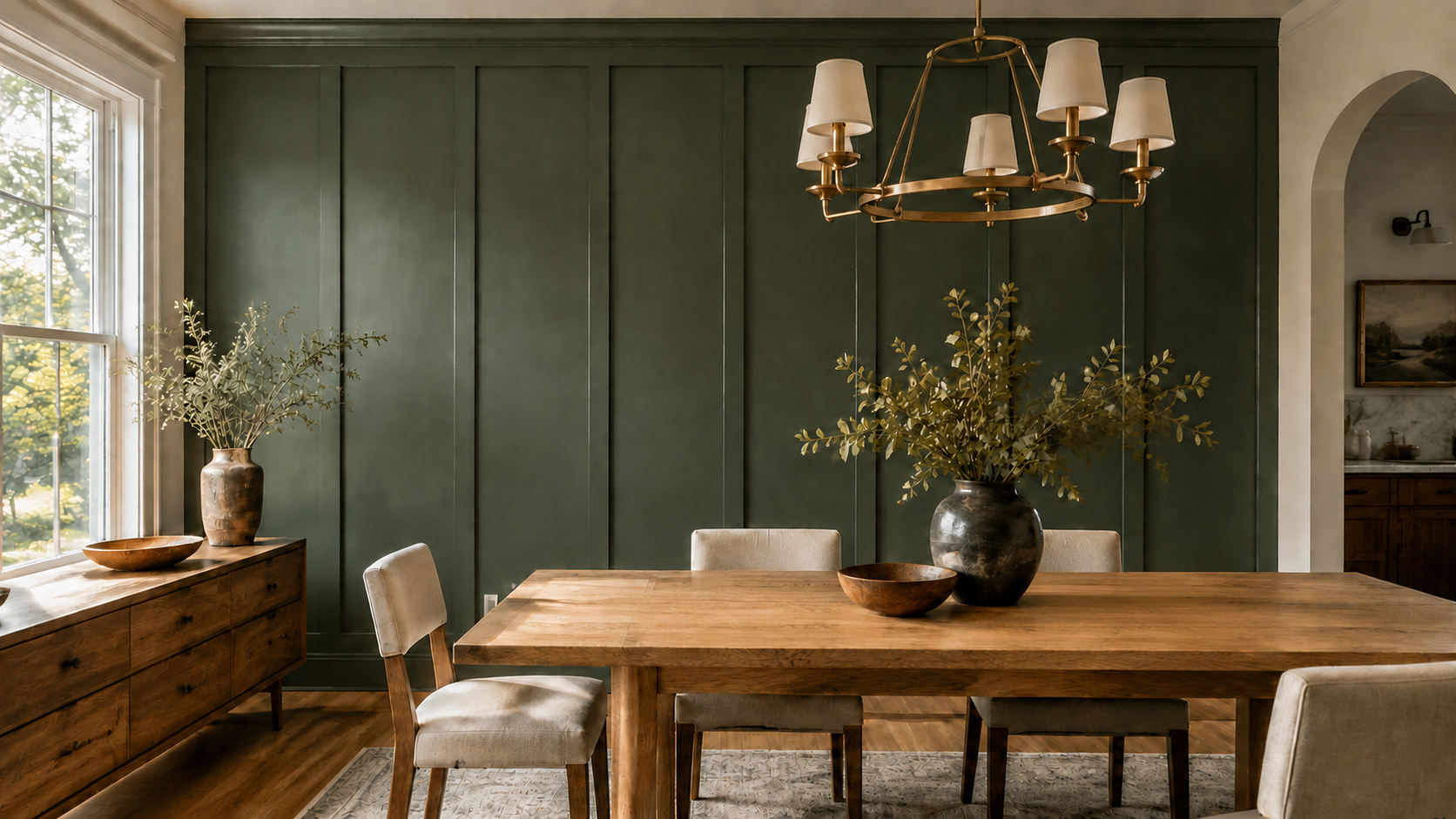
Pass an old barn anywhere in central Indiana and you’ll see board and batten doing the job it was invented for: sealing rough-sawn boards against Midwest weather. That same detail now shows up in entryways, dining rooms, and bathrooms across the state, and homeowners keep asking for it by name.
At Radford Woodworks, we build board and batten walls, wainscoting, and trim for homes across the Indianapolis area. This guide covers what the detail is, where it started, what it costs, and how the look is changing in 2026.
What Is Board and Batten, Exactly?
Board and batten is a two-part wall treatment: wide flat boards set side by side, with thinner battens nailed over the gaps between them. The battens hide the seams and add a raised, ribbed texture that reads as more solid and intentional than flat paint or wallpaper.
The detail began as a siding technique, not a decorating one. Builders needed a simple way to seal the joints between rough-sawn boards on the outside of a house, and the batten strip solved the problem without complicated joinery. Interior designers later borrowed the look for wainscoting and accent walls, and it has stayed in demand ever since.
Where Did Board and Batten Come From?
Board and batten traces back to vertical wood siding in Scandinavia and northern Europe, where builders wanted a weathertight way to close the gaps between boards in hard climates. English and Dutch settlers carried the technique to North America in the 18th century, where it became the standard cladding for barns and farmhouses. By the 1830s and 1840s it helped define the Gothic Revival style, and architect Andrew Jackson Downing praised vertical boarding for the sense of strength it gave a house compared with horizontal clapboard.
That barn-and-farmhouse history is exactly why the look feels at home in Indiana. It has real regional roots, not a decorating fad borrowed from somewhere else.
Is Board and Batten Still in Style for 2026?
Yes, though the style is moving away from the tight, uniform farmhouse spacing that ruled the last decade. Woodgrain’s 2026 interior trends report names fluted and reeded millwork, a close cousin of board and batten, among the year’s defining details, with the look shifting toward wider spacing, more pronounced grooves, and materials like stained wood, stone, and concrete.
On real projects, that shift looks like:
- Wider board spacing in place of tight, repetitive slats
- Stained or natural wood tones instead of all-white paint
- Mixed heights, with battens run partway up a wall, floor to ceiling, or across a ceiling as a coffered detail
- Bolder, moodier paint colors on the boards, set against contrasting trim
The same report calls the broader 2026 movement Modern Heritage: classic millwork details reworked with updated finishes and looser symmetry. Board and batten fits that description almost perfectly, since the bones of the technique are centuries old and the finish choices are wide open.
How Much Does Board and Batten Cost?
Board and batten siding averages $7.72 to $8.44 per square foot installed, which works out to roughly $6,111 for a 1,000-square-foot project and up to $18,671 at 2,000 square feet, materials and labor included, according to This Old House’s 2026 pricing guide. About 67% of the bill goes toward materials such as boards, battens, fasteners, and moisture barriers, with the remaining 33% covering labor.
Interior accent walls cost far less than full exterior siding, since the area is smaller and no weatherproofing is required. The detail also holds its worth over time. Properly maintained board and batten can last 20 to 30 years, and siding upgrades in this family consistently rank among the stronger exterior projects at resale, returning roughly 70 to 80% of project cost.
Board and Batten vs. Shiplap: What’s the Difference?
Board and batten uses raised battens over the seams for a ribbed, three-dimensional texture, while shiplap uses overlapping horizontal boards for a flatter, lined look. Board and batten reads as more architectural and structured, which is why it tends to show up in entryways, dining rooms, and bathrooms where a sense of permanence matters. Shiplap leans casual and horizontal, better suited to a lighter, breezier feel.
| Feature | Board and Batten | Shiplap |
|---|---|---|
| Orientation | Typically vertical | Typically horizontal |
| Texture | Raised, ribbed | Flat, lined |
| Best rooms | Entryways, dining rooms, bathrooms, TV walls | Living rooms, bedrooms |
| Feel | Structured, architectural | Casual, breezy |
Why the Look Keeps Gaining Ground
The remodeling market explains much of the staying power. Home improvement spending has grown to 44% of residential construction activity, up from 33% in 2007, and the National Association of Home Builders expects remodeling activity to grow another 3% in 2026. The average American home is also getting older, 41 years old in 2023 compared with 31 in 2006, which means more owners are updating rooms instead of moving.
Detail-focused, moderate-cost upgrades fit that shift well. A board and batten wall adds real character to a room without the scope, mess, or budget of a full renovation, and it photographs beautifully when it’s time to sell.
Where Does Board and Batten Work Best? 5 Timeless Spots
The rooms where board and batten earns its keep are the ones people pass through and gather in every day. These five placements come up most often on our builds:
- Entryways and hallways. A hardworking first impression that shrugs off boots, bags, and pet traffic.
- Dining rooms. Pairs naturally with wainscoting height and a chair rail for a traditional line.
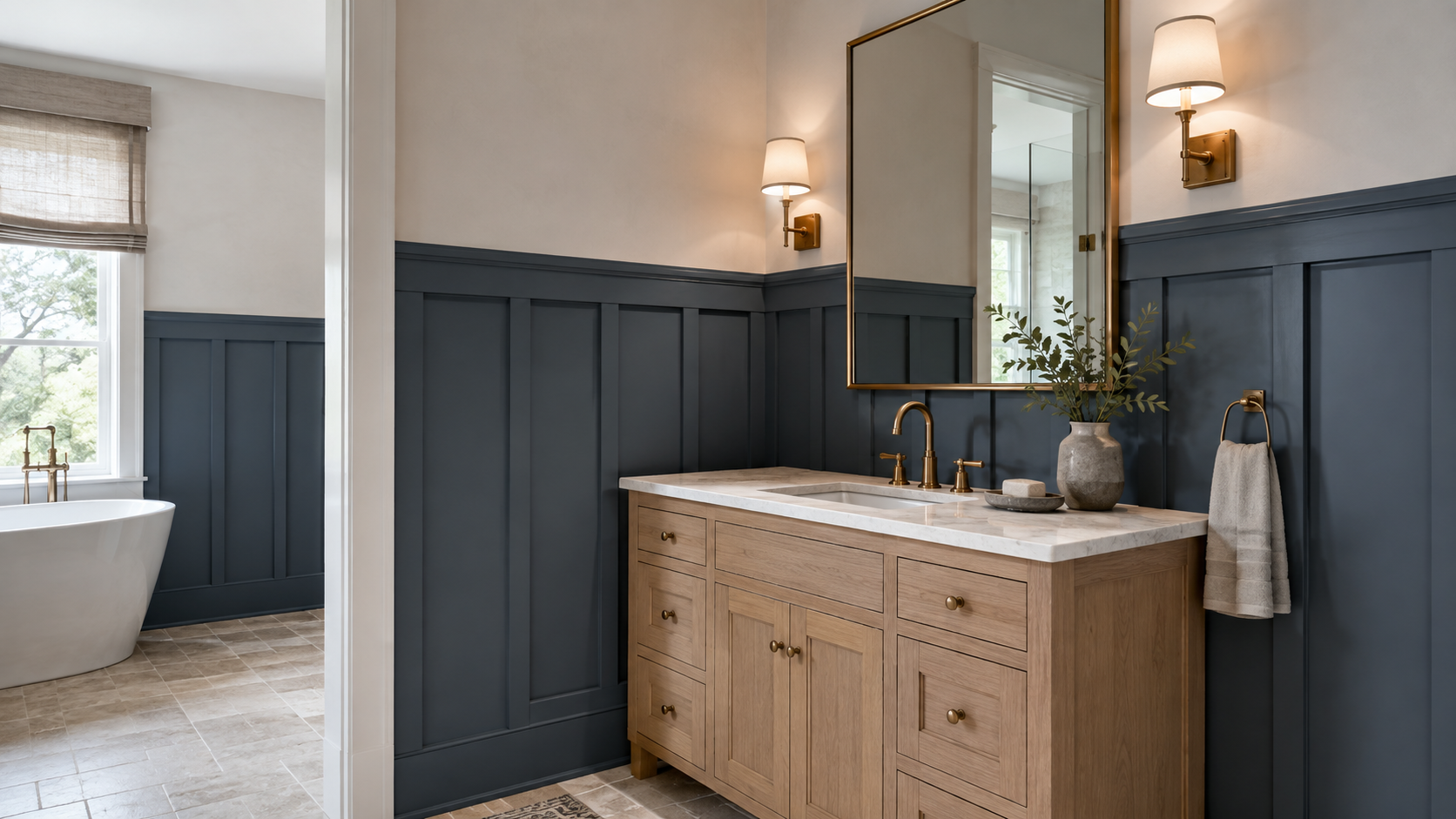
- Bathrooms. Holds up well around moisture when the boards are primed, painted, and sealed correctly.
- TV walls and fireplace surrounds. Adds texture behind a focal point without competing with it.
- Staircases. Wraps a stair wall or landing so the whole run reads as one architectural line.
Frequently Asked Questions
Is board and batten out of style?
No. The technique is centuries old, and 2026 trend reports show it shifting rather than disappearing, with wider board spacing, richer wood tones, and looser layouts leading the change.
Can board and batten go in a bathroom?
Yes. Primed, painted, and sealed correctly, board and batten performs well in bathrooms and is a popular way to add texture around vanities and tub surrounds. A satin or semi-gloss finish makes wipe-downs easy.
How much does interior board and batten cost compared to siding?
Interior accent walls typically cost far less than exterior siding because the square footage is smaller and no weatherproofing is required. Full siding installation averages $7.72 to $8.44 per square foot, per This Old House.
What’s the difference between board and batten and wainscoting?
Wainscoting is the umbrella term for any decorative lower-wall treatment, and board and batten is one style of it. The name refers to the wide-board-and-narrow-strip pattern, which can also run full height as an accent wall.
If a room in your home feels flat, a board and batten wall is one of the most dependable ways to give it structure and warmth. Look through recent builds in our gallery, follow along on Instagram and Facebook for new projects as they wrap, including this recent post, or start with our wall quote form and we’ll put a design and price together for your space. You can also reach us anytime through our contact page. We’d love to hear what you’re planning.