
Shiplap, board and batten, or a slat wall. Settle that choice early and every decision after it gets easier, because each style asks something different of the room, the budget, and whoever holds the duster.
All three have full guides on this blog. This post sets the three most requested Indiana wall paneling styles side by side, compares them trait by trait, and calls a verdict for every room in the house.
At a Glance
- Shiplap gives thin shadow lines, board and batten a raised grid, a slat wall vertical wood rhythm: three fixes for a flat wall.
- Board and batten handles kids, pets, and hallway traffic best; slat walls ask for the most dusting; shiplap lands in the middle.
- Bedrooms and fireplace walls favor shiplap, entries and dining rooms board and batten, TV walls and basements stained slats.
- Two styles can share one home when each owns its own wall and a color or wood tone repeats between rooms.
Shiplap, Board and Batten, or Slat Wall: Which One Fits Your Room?
Shiplap fits relaxed rooms, board and batten fits busy rooms that need scuff protection, and a slat wall fits modern rooms that want grain and quiet. A short summary of each sets up the head-to-head.
Shiplap is plank paneling with a rabbeted edge, so each board overlaps the next and leaves a thin, even shadow line. Our shiplap walls guide covers 2026 finishes, board direction, and what makes an install last.
Board and batten pairs wide flat panels with narrow battens nailed over the seams, a raised grid that reads solid and structured. The full board and batten guide traces it from Indiana barn siding to today’s wider, moodier versions.
A slat wall lines up narrow vertical strips of solid wood with even gaps between them, almost always stained. The red oak slat wall at Chatham Hills shows the style at full strength and appears again below.
How Do the Three Indiana Wall Paneling Styles Compare?
Board and batten takes the most punishment, shiplap suits the most rooms, and a slat wall trades extra dusting for warmth paint cannot match. The table breaks it down trait by trait.
| Trait | Shiplap | Board and Batten | Slat Wall |
|---|---|---|---|
| The look | Thin, even shadow lines | Raised battens over flat panels in a bold grid | Narrow vertical strips with open gaps |
| Best rooms | Bedrooms, fireplace walls, mudrooms | Entries, dining rooms, hallways, bathrooms | TV walls, offices, basements, stair walls |
| Ceiling height | Any; vertical runs stretch an 8-foot room | Any; full height or wainscot height both work | Strongest floor to ceiling |
| Paint or stain | Either; paint hides grain, stain shows it | Almost always painted, often one deep color | Almost always stained to show the grain |
| Cleaning and dusting | Light dusting along each shadow line | Easiest; flat painted panels wipe down fast | Most work; gaps catch dust |
| Kids and pets | Painted board hides scuffs well | Best of the three; battens shrug off boots | Sturdy in solid wood; open gaps invite small fingers |
| Install difficulty | The first board must sit dead level; every course follows it | Layout around outlets, windows, and corners takes real planning | Even spacing and dead-straight slats demand patience |
Livingetc’s designer roundup of paneling types from October 2025 backs the same read: shiplap as the classic whose overlapping joint leaves a wider reveal than tongue and groove, board and batten (filed under its Shaker name) still in style with most designers and prized for protecting hard-used walls, and slatted paneling as the contemporary pick for warming a room without blocking light. The caution designers repeat: if battens are not straight or proportions are wrong, the whole room looks off.
What Does Each Style Look Like on a Real Indiana Wall?
One finished Radford Woodworks build per style, all in central Indiana.
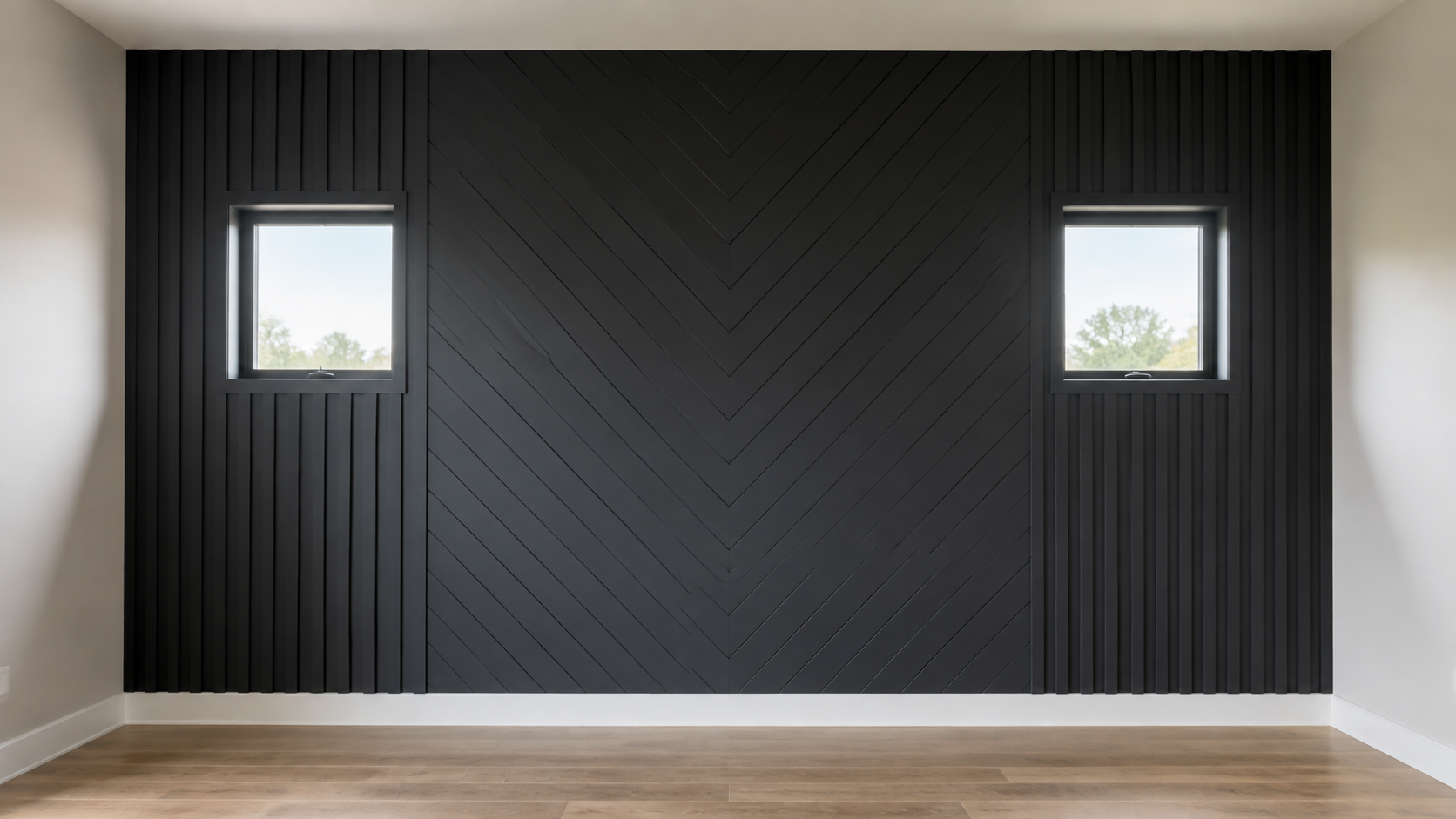
A Matte Black Chevron Shiplap Wall
Shiplap does not have to run straight. On this wall the boards meet at an angle in a chevron layout, framed by vertical slat panels and finished in matte black, so the pattern reads as one piece and works as the room’s only art.
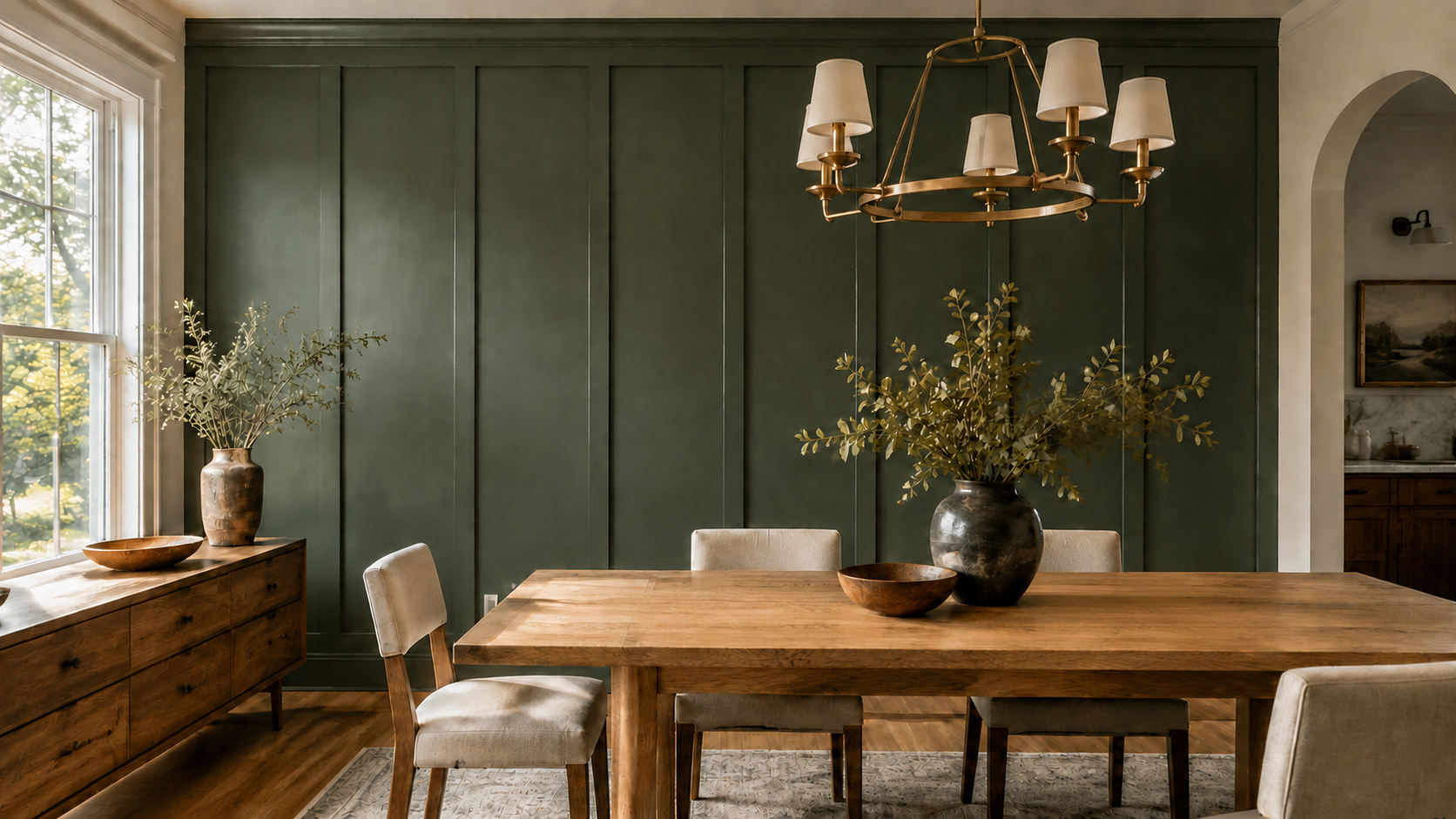
A Deep Green Board and Batten Dining Room
Full-height board and batten in a single deep green turned this dining room wall into its most formal surface. Battens run floor to ceiling with spacing worked out for that exact wall, and the dark color lets the wood table and brass chandelier carry the contrast. Guests sit still at dinner, so the wall earns the attention.
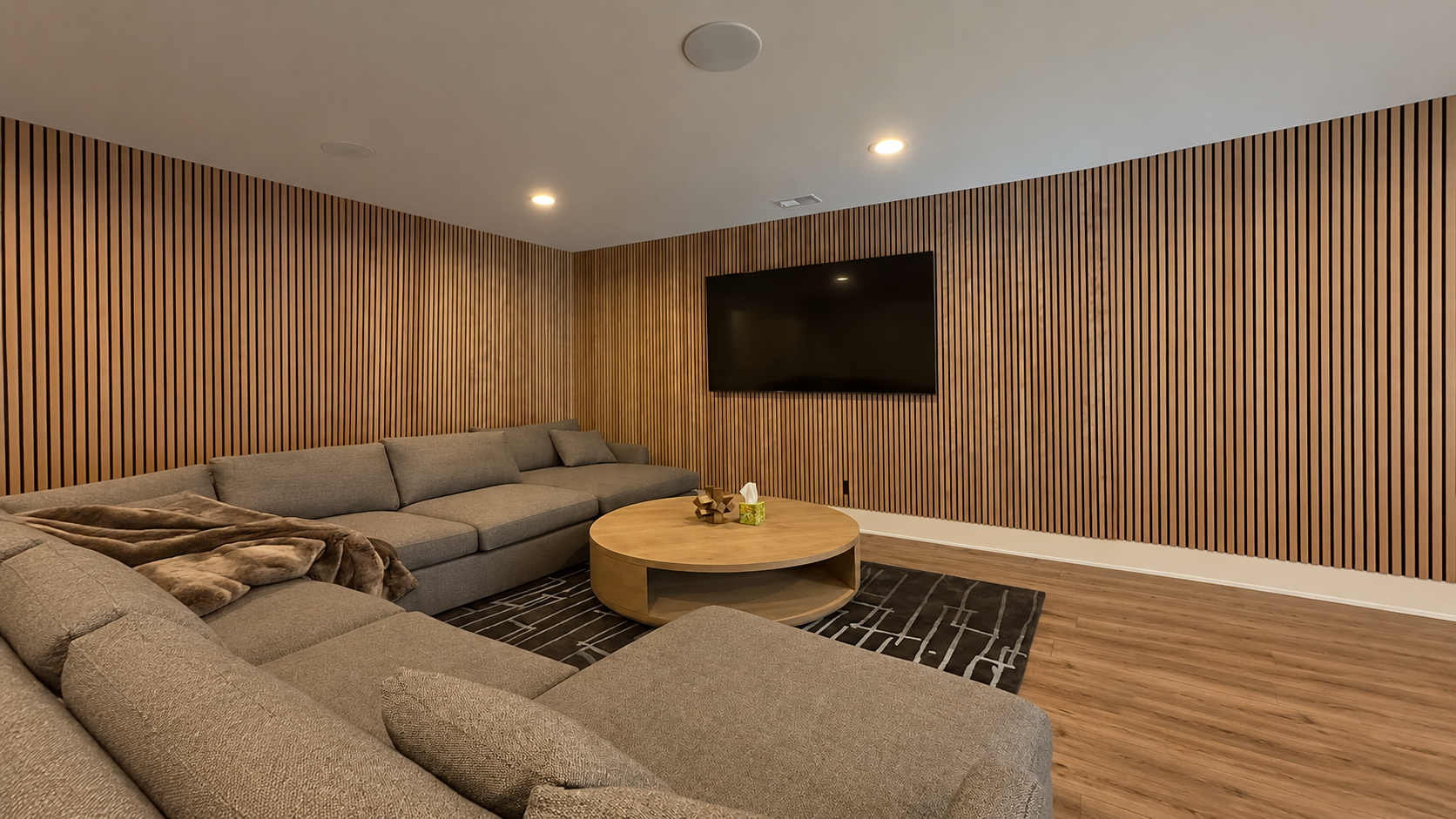
A Red Oak Slat Wall at Chatham Hills
The red oak slat wall at The Club at Chatham Hills runs through two rooms, the main living space and the owner’s suite washroom. A returning client who moved from Geist had Radford Woodworks carry one material and finish across both, down to outlet covers matched to the wood tone. Red oak earned the role with its pronounced grain and warm amber color.
Which Wall Paneling Style Suits Which Room?
Board and batten wins busy rooms, shiplap wins restful ones, and slat walls win wherever grain and height matter.
Living room. Any of the three earns the spot: a stained slat wall behind the TV, shiplap on the fireplace wall, or board and batten on the long wall.
Bedroom. Shiplap, run vertical in a moody color, makes the wall behind the bed feel taller and calmer. A stained slat wall reads more like a boutique hotel.
Hallway. Board and batten, full stop. Battens take the scuffs, bags, and pet traffic hallways collect, and wainscot height keeps a narrow space from feeling crowded.
Bathroom. Board and batten or shiplap suits a powder room when every face is primed, painted, and sealed; the Chatham Hills washroom proves a slat wall works outside the splash zone.
Basement. A slat wall, stained warm, is the fastest way to make a low, below-grade room feel taller. Sort out moisture first, then build.
Can You Mix Two Paneling Styles in One Home?
Yes. Two Indiana wall paneling styles can share one home when each owns its own wall or room and something repeats between them: a paint color, a wood species, or a sheen.
The builds above prove it. The chevron wall pairs angled shiplap with vertical slat panels on one surface and still reads as one design because one pattern leads. At Chatham Hills, the same red oak slats repeat in two rooms, which is what makes the home feel planned. Two patterns competing in one sightline is where mixing goes wrong.
What Should You Decide Before the Quote?
Four decisions shape the design and the price before anyone cuts a board.
Wall condition. Paneling installs over sound drywall, with boards nailed into studs. Bowed framing, heavy texture, or old wallpaper needs attention first, so mention it up front.
Outlets and switches. Count every box on the wall. Boxes get extended to sit flush, and covers can be swapped to match the finish, the detail that completed the Chatham Hills wall.
Baseboard height. Decide if the existing base stays, gets replaced taller, or the paneling dies into it. That single call sets the line the whole design stands on.
Paint or stain. Paint opens the door to poplar and MDF and suits board and batten; stain calls for solid wood chosen for its grain. Either way the finish goes on with an airless sprayer, so no brush or roller marks catch the light.
Common Questions About Wall Paneling in Indiana
Is shiplap out of style in 2026?
No. The flat white farmhouse version faded, but shiplap has settled in as a staple. Current Indiana builds lean on moody colors, vertical and chevron layouts, and stained wood, so it fits modern and traditional rooms alike.
Is board and batten hard to clean?
No, it is the easiest of the three to keep clean. Flat panels wipe down fast, satin or semi-gloss paint stands up to scrubbing, and the only extra step is a duster along the batten tops now and then.
Do slat walls collect dust?
Yes, more than shiplap or board and batten, because the gaps between slats catch what a flat wall sheds. A vacuum brush or long-handled duster clears them in minutes, and most owners fold it into normal cleaning.
Which wall paneling style makes a low ceiling feel taller?
Vertical lines do the lifting: vertical shiplap, full-height board and batten, and floor-to-ceiling slats all help. A stained slat wall pulls the eye up most strongly, which is why it keeps showing up in basements and 8-foot rooms.
Start With One Photo
One photo is all a quote takes. Shoot the wall you have in mind and send it through the wall quote form. Every Radford Woodworks project is designed for the actual wall and priced as a complete job, so the answer comes back matched to your room, and we would be glad to help you pick the style your wall wants to be.