
The hardest day of the year on a wood countertop is the fourth Thursday in November. Roasting pans, casseroles, sweating ice buckets, and candles land on finished wood within hours, while the furnace dries out every board.
We are Radford Woodworks, a custom woodworking company in central Indiana, and we build the mantels, shelves, countertops, and trim that take that beating. This guide looks at Thanksgiving hosting from the wood’s side.
Why is Thanksgiving so hard on a home’s woodwork?
Thanksgiving stacks heat, standing liquid, open flame, extra weight, and furnace-dry air onto wood in one afternoon. In our view, most holiday damage comes from moisture and heat, not wear, and both are preventable.
Film finishes such as lacquer, polyurethane, and paint sit on top of the wood; oil finishes soak into the fibers. Heat and moisture hit that finish first. The air matters too: the USDA Forest Products Laboratory’s Wood Handbook notes that wood’s moisture content follows the humidity and temperature around it, and that wood shrinks far more across the grain than along it.
Which 9 proven ways protect your wood during Thanksgiving hosting?
Nine habits cover it: keep heat off bare wood, liquid off finishes, flame away from mantels, weight off shelves, and humidity steady.
1. Keep hot dishes off bare wood counters and tables
Always put something between a hot dish and the wood, because heat pushes moisture into a finish and clouds it. To protect a wood table from heat, set out trivets, hot pads, or a long buffet runner before the food arrives.
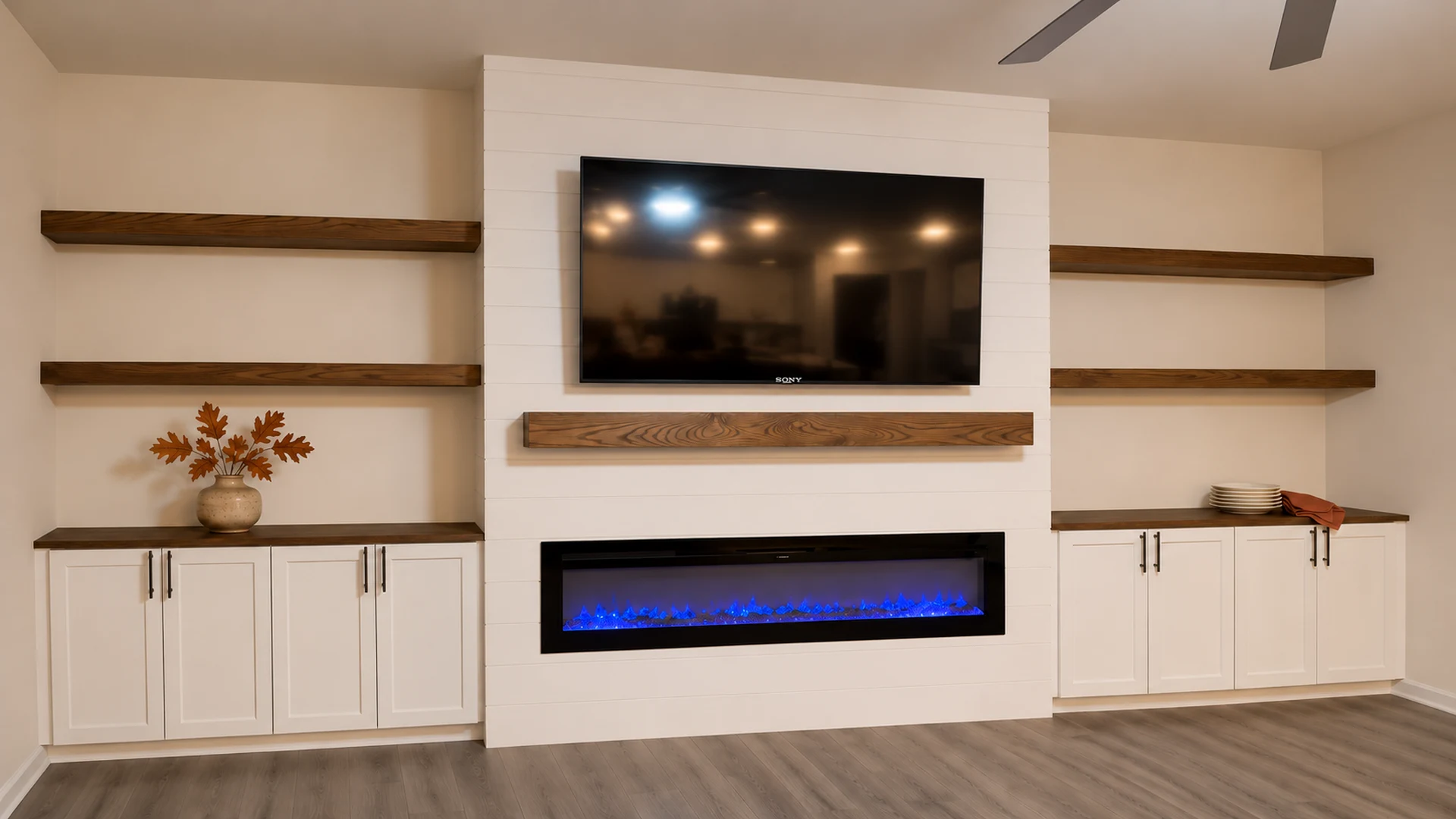
Trapped steam turns a film finish milky white; heat can leave a dull patch on an oil finish. Slow cookers need a cutting board underneath. Oak countertops beside a fireplace, like the ones we built on site next to a shiplap surround, tend to become the buffet line.
2. Catch drink spills and rings fast, especially on bar tops and shelves
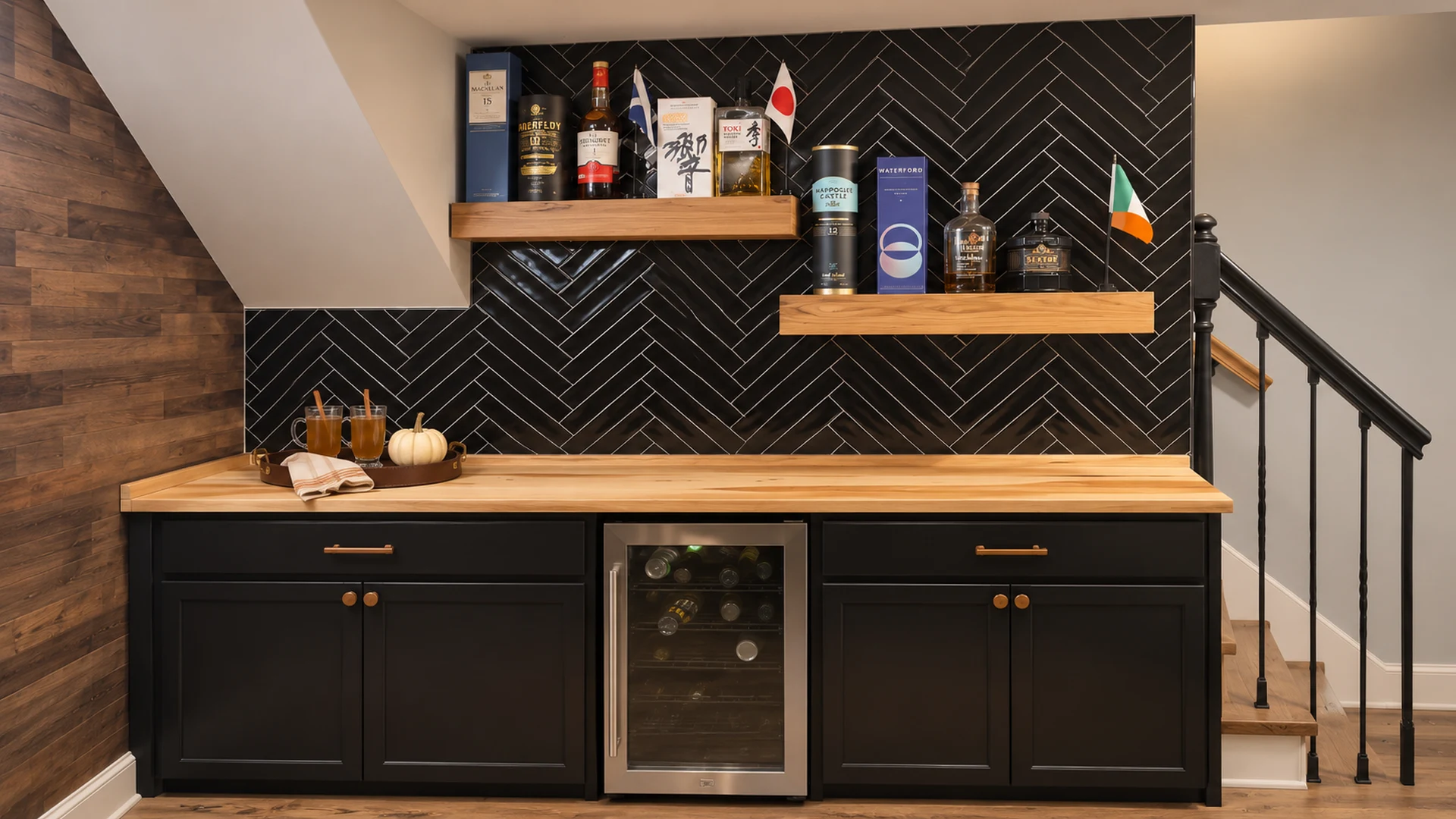
Wipe spills the moment they happen. A white ring means moisture is trapped in the finish; a dark ring means water reached the wood, which is harder to fix.
Ice buckets and cold bottles sweat all evening, so set them on a tray, keep coasters within reach of every seat, and check shelves for glasses tucked behind decor.
3. Keep candles off and away from wood mantels and shelves
Open flame belongs well away from a wood mantel, because the mantel itself can burn. The National Fire Protection Association advises keeping candles at least 12 inches from anything that can burn, and reports that over half of candle fires start when furniture, decorations, or other flammable items sit too close.
Short of fire, rising heat can soften the finish on a shelf above, and wax drips take work to lift. On mantels and floating shelves, we’d use flameless candles.
4. Keep indoor humidity steady while the furnace runs
Steady humidity keeps trim joints tight in winter. The EPA recommends indoor relative humidity below 60 percent, ideally between 30 and 50 percent.
Heated air pulls moisture out of trim, so a mitered casing corner or paneling seam can open a hairline gap. A humidifier on a modest setting keeps the swing small; going too high invites condensation and mold. Our post on how humidity opens trim joints covers the why.
5. Do not overload floating shelves and mantels with decor
A floating shelf holds what its hidden bracket and the studs behind it were built for, so keep decor light and set heavy pieces toward the back.
Real pumpkins and gourds need a plate, since they sweat and can mark the wood. Oak floating shelves like the ones we color matched to a mantel on a stacked-stone fireplace wall are built to display, not to store.
6. Give coats and bags a place that is not the paneling or wainscoting
Plan a coat spot before guests arrive, because a pile against the wall scuffs and dampens the paneling. A rolling rack, a cleared closet, or a spare bed works.
7. Clean painted trim gently, and know what not to use
Clean painted trim with a soft cloth, plain water, and a drop of mild dish soap, wrung out until barely damp. Paint is a film finish, and scrubbing wears its sheen unevenly, so skip melamine sponges, abrasive powders, and strong degreasers.
8. Clean oil-finished wood differently from sealed wood
Oil-finished wood needs a barely damp cloth and its maker’s cleaner, not a household spray. One hardwax-oil maker’s care guidance says never to saturate the surface and to avoid generic cleaning products that can compromise the finish.
Sealed film finishes like lacquer and polyurethane handle a damp cloth with mild soap. Oil finishes live in the fibers, where residue and harsh cleaners can strip the oil. That split holds for wood furniture care across the house; if you’re unsure of the finish, use a damp cloth only.
9. Do a walkthrough after guests leave
Good holiday wood care ends with a five-minute walkthrough the next morning. Wipe and dry anything damp, lift hardened wax with a plastic card, and leave white marks alone for a few days, since light ones sometimes fade. Dark stains, scorch marks, a shifted shelf, or a cracked mantel belong on a carpenter’s list.
Which problem is which?
Most party damage falls into a few patterns.
| What you see | What caused it | How to prevent it | What to do after |
|---|---|---|---|
| Cloudy white ring | Heat or moisture in a film finish | Trivets, hot pads, coasters | Wait; call a finisher if it stays |
| Dark ring or gray stain | Water that reached the wood | Fast wiping; trays under bottles | Call a pro |
| Dull patch on oiled wood | Cleaner residue or heat | The maker’s cleaner only | Clean properly; re-oil if needed |
| Wax on a mantel | Candles on or below the wood | Flameless candles | Let it harden; lift with a plastic card |
| Gaps at trim corners | Dry air shrinking the wood | Steady indoor humidity | Wait a full year before filling |
| Shelf tipping forward | Too much weight too far out | Heavy pieces at the back | Unload it; have it checked |
| Scuffs on paneling | Coats, bags, chair backs | A coat spot away from walls | Gentle cleaning; touch-up paint |
What should never touch your woodwork during a party?
Heat, standing liquid, open flame, and harsh chemicals do the most harm.
- Pans and baking dishes straight from the oven
- Slow cookers and chafing dishes without a board underneath
- Lit candles closer than 12 inches to wood
- Ice buckets, bottles, and glasses without a coaster or tray
- Real pumpkins and potted plants with no plate
- All-purpose sprays, bleach, ammonia, and abrasive pads
When should you call a carpenter instead of fixing it yourself?
Call a carpenter when damage goes past the finish into the wood, or when something structural moves: dark stains, scorch marks, cracks, loose trim, or sagging shelves.
Seasonal gaps deserve patience. Our warranty treats small gaps from seasonal humidity as normal wood movement, not a defect. If a gap stays open after a full year of steady humidity, have a pro look. For patching damaged wood, see our guide to matching new wood to existing floors and mantels. Upgrades are a separate project, covered in our trim upgrades for holiday hosting.
Frequently Asked Questions
How do I get white heat marks off a wood table?
White heat marks are moisture trapped in the finish, not damage to the wood. Light marks sometimes fade over a few days. If one stays, have a finisher look before trying heat or abrasives, which can turn a cloudy spot into a bare one.
Are trim gaps in winter normal?
Yes. Dry furnace air lowers the moisture in trim, and wood shrinks mostly across the grain, so miters and seams open slightly in winter and often close as humidity returns. Holding indoor humidity steady, within the EPA’s recommended 30 to 50 percent, limits the swing.
Are candles safe on a wood mantel?
A lit candle on a wood mantel is a fire risk, because the mantel itself can burn. NFPA advises keeping candles at least 12 inches from anything that can burn. Flameless candles are the safer choice on mantels and shelves.
How do I clean a wood bar top after a party?
Wipe spills and condensation right away, then clean with a soft cloth that is damp, not wet, and dry the surface. Mild soap is fine on a sealed film finish; on an oil finish, use only the maker’s recommended cleaner.
A note from our shop
Wood is built to be used, and a full holiday table is the reason we build it. For Thanksgiving hosting, a few trivets and a steady humidifier beat any repair after the fact.
We hope these tips help wherever you’re hosting. If you’re in central Indiana and something needs repair, send us a few photos and we’ll take a look, or give us a call.