
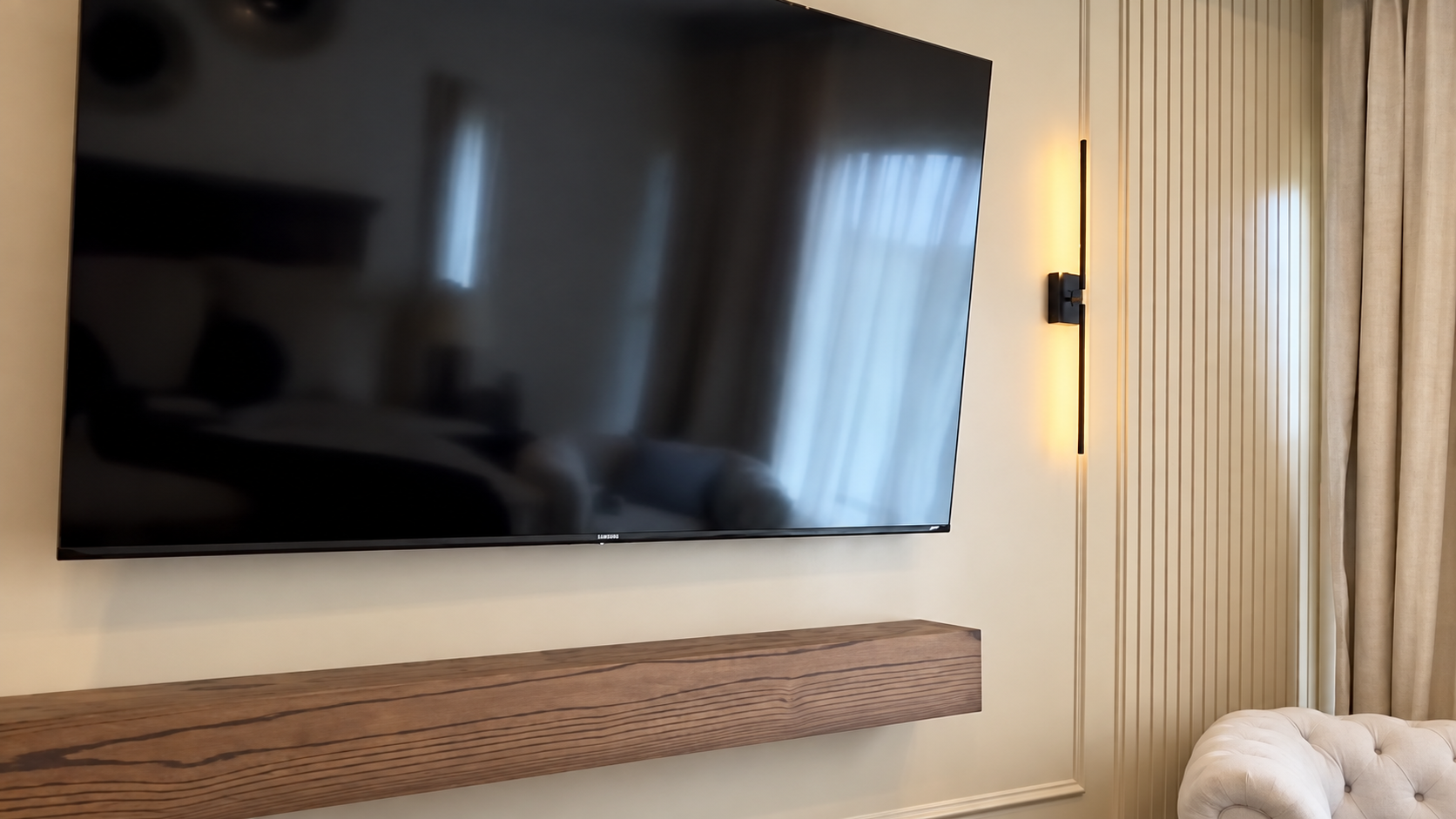
Ask two designers about fluting in 2026 and you may get opposite answers. One calls it the look of the early 2020s. The other points to Greek columns and calls it one of the oldest details in the book. Indiana fluted walls sit in the middle of that argument, and the deciding factor is not the trend cycle. It is the build. Groove spacing that fits the wall, a material that takes its finish well, and fluting kept to one surface instead of five: the Radford Woodworks panels that hold up all share those three traits.
At a Glance
- Designers are split on fluting in 2026: oversaturated to some, ancient architecture to others.
- The build decides it. Groove spacing that fits the wall, a material that finishes well, one fluted surface per room.
- Fluted grooves are scooped into the face; reeded ridges stand proud of it.
- A sprayed finish keeps paint from pooling in the grooves or sitting thin on the ridges.
- Keep fluting away from cooktops, splash zones, and small rooms already full of pattern.
Are Fluted Walls Going Out of Style, or Are They Here to Stay?
Fluted walls are staying; fluting on every surface is going. That is the honest reading of this year’s split in the design press.
Apartment Therapy’s April 2026 list of trends designers are retiring included fluted millwork, with designer Kellie Reynolds calling it overused next to a thin Shaker or flat-panel front. Her advice was to keep fluting off the fixed pieces and bring it in as an accent. A Homes and Gardens debate from June 2026 gave both sides the floor. The tired camp says the detail became a shortcut, spread across islands, pantries, vanities, and tile until it stopped feeling special, and that a room wrapped in one trend reads as early-to-mid 2020s forever. Two practical knocks follow: every groove is another surface to wipe down, and fluted fronts are hard to refinish later. The staying camp answers with history. Fluting started on Greek columns, and on a single element it anchors a room while everything else stays quiet.
Both camps land on the same fix, which matches the carpenter’s position: one fluted surface, chosen on purpose, built to fit the room. In the 2026 U.S. Houzz Kitchen Trends Study, a survey of 1,780 renovating homeowners, wood passed white as the top cabinet color, 29 percent to 28, with medium tones leading the wood picks. Stained fluted panels sit inside that swing toward warm, natural surfaces.
What Is the Difference Between Fluted and Reeded Panels?
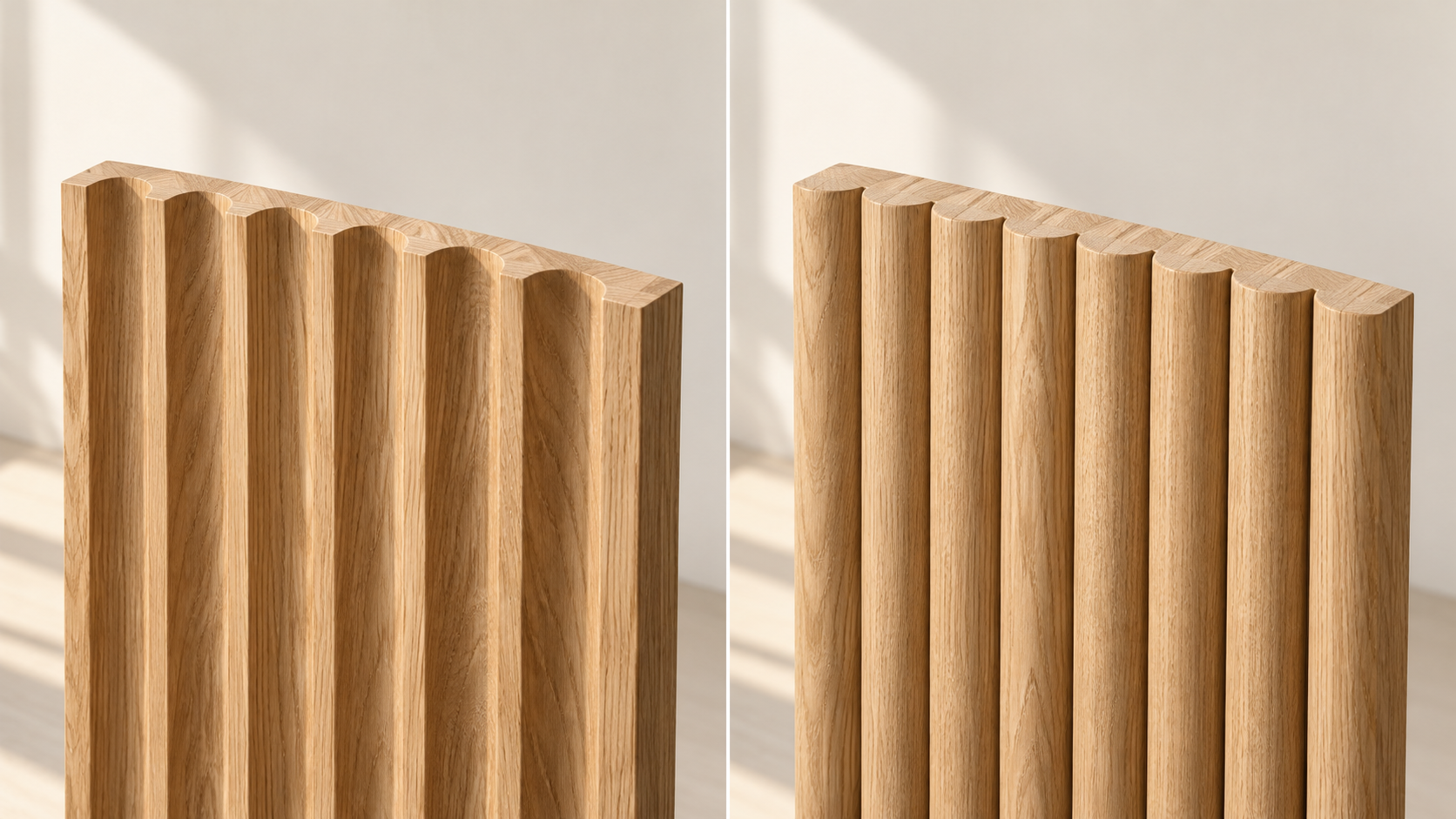
Fluted panels have concave grooves cut into the face. Reeded wall panels have rounded ridges standing proud of it. Both throw vertical shadow lines, but they read and clean differently.
| Fluted panels | Reeded panels | |
|---|---|---|
| Profile | Concave channels scooped into the face | Rounded beads raised above the face |
| Shadow line | Soft shadow rests inside each groove | Crisper shadow falls between each ridge |
| Best light | Even window light or a soft wall wash | Side light that rakes across the ridges |
| Cleaning | Dust settles at the groove bottoms; a vacuum brush run with the grooves clears it | Ridge tops wipe fast; the valleys between beads need a duster pass |
Scale sorts them out. Big walls want the calmer read of fluting; reeding suits furniture-scale pieces seen up close.
Which 6 Indiana Fluted Walls Still Look Right in Five Years?
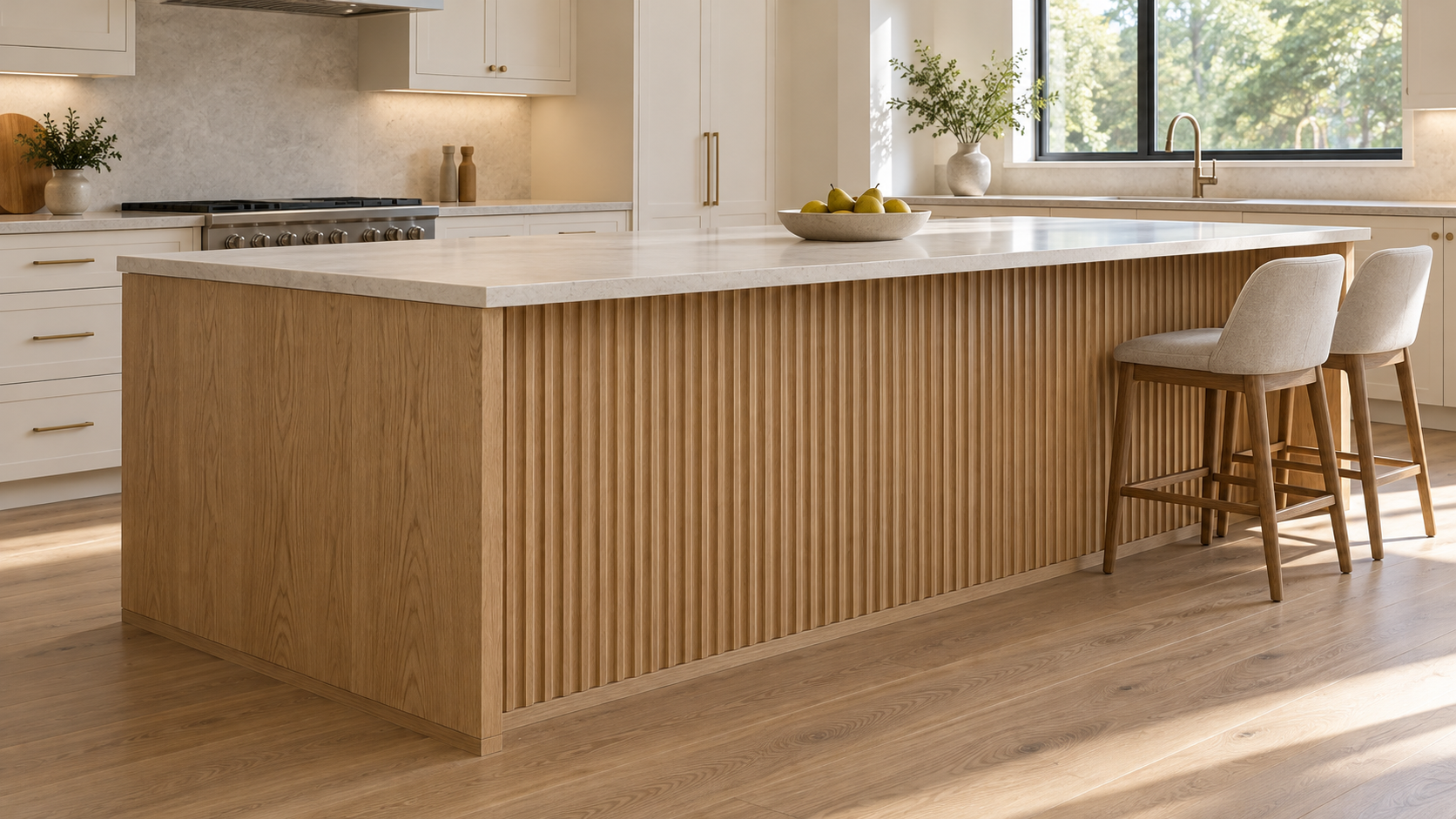
Six builds carry fluting past the trend cycle, each keeping it to one surface. Island wraps and vanity fronts count; the eye reads those faces like small walls.
1. Full-Height Fluted Accent Wall
A floor-to-ceiling fluted wall behind a bed or a desk gives the room one strong surface and asks nothing else of it. Radford Woodworks centers the pattern, locates outlets before milling, and paints the panel a color rich enough to let the shadow lines carry the room.
2. Fluted Island Wrap
A fluted island puts texture where hands and eyes land while flat perimeter cabinets keep the kitchen calm. Wrapped in stained white oak, it rides the swing back to wood the Houzz study measured.
3. Fluted Fireplace Surround
Flutes flanking an electric fireplace frame the unit the way pilasters frame a doorway, pulling the eye up the wall instead of across it. A stained mantle breaks the vertical run and warms the fluted fireplace surround.
4. Fluted Bar Back
The black fluted wall Radford Woodworks built behind a wet bar is the accent principle at work: one bold surface, a floating wood shelf, and lighting that rakes the grooves after dark. It appears in the Indiana accent walls guide, and the wet bar vs dry bar breakdown covers the choice behind it.
5. Fluted Vanity Front
At arm’s length a tighter flute rhythm reads clearly, so vanity fronts carry closer spacing than a full wall. Kept out of direct spray with every edge sealed, the piece wears like furniture.
6. Fluted Half-Wall With a Cap
Fluting run to wainscot height on a stair landing or dining wall, finished with a flat cap, earns its keep in high-traffic spots. The cap shields the top edge and takes the same paint as the room’s trim.
Why Does Groove Spacing Decide Whether Fluting Looks Custom or Cheap?
Groove spacing is the tell. When the flute rhythm matches the wall and the distance people see it from, the panel looks milled for the room. When it misses, it looks like a sheet product the wall had to accept.
A wall seen from across a great room carries broad, calm flutes; a bar front seen up close holds a tighter rhythm. Edges give the game away. A well-planned wall lands a full flute at each end with the pattern centered, so no sliver of a groove dies into a corner. Custom milling allows that, because the panel is sized to the wall. Off-the-shelf sheets make the wall answer to the sheet instead.
Paint or Stain: How Does Radford Woodworks Finish Fluted Panels Evenly?
Sprayed, either way. A brush leaves paint pooled in the grooves and thin on the ridges, so Radford Woodworks sprays every finish with an airless sprayer, leaving no brush or roller marks.
Painted panels get primed, lightly sanded, and coated in thin passes angled so the film covers the groove walls without bridging across them. Stained panels take careful sanding, a conditioner on blotch-prone stock, stain wiped so color does not pool dark in the channels, then a sprayed clear coat. Satin flatters fluting; high gloss calls out every ripple.
Where Should You Not Put Fluting?
Keep fluting away from grease, grime, and rooms already busy. The grooves that make the detail beautiful also multiply the surfaces you clean.
Skip the cooktop zone and backsplash runs, where airborne grease settles into every channel. Keep fluted fronts out of direct splash in baths, and off mudroom or hallway walls where bags and shoulders drag across them. In a small room already carrying pattern, pass entirely. The Homes and Gardens designers made the same point: fluting on every surface cancels itself out.
FAQ: Indiana Fluted Walls
Do fluted walls collect dust, and how do you clean them?
They collect it at the bottom of each groove, the same way a shelf edge does. A vacuum with a soft brush run in the direction of the grooves clears most of it, and a dry microfiber cloth follows the channels for the rest. A sprayed finish wipes clean without snagging the cloth.
Is MDF or solid wood better for fluted panels?
MDF machines a crisp, consistent flute and stays flat under paint, which makes it a strong pick for painted walls in dry rooms. Solid wood suits stained work and spots that see moisture or hard knocks, since its edges seal and repair well. Radford Woodworks matches material to the room and finish rather than defaulting to one.
How do you match a fluted island to the rest of the trim?
Match scale first: the flute rhythm should look like family next to your door casings and cabinet doors. Then match finish, either the trim’s paint color and sheen or a stain checked against a flooring sample. Bringing a door or floor sample to the quote settles both early.
Do fluted panels hold up in a house with kids?
Yes, with the right material in the right place. A sprayed finish on solid wood or MDF wears the way good painted trim wears, and the shadow lines hide small scuffs better than a flat wall does. Save fluting for surfaces kids brush past rather than climb on.
Start With a Photo of Your Wall
A fluted wall, island, or bar back starts the way every Radford Woodworks project does: with a photo of your actual wall sent through the wall quote form. More finished work, including the fluted bar wall, lives in the gallery. A short conversation about spacing and finish separates a panel that dates from one that lasts.